

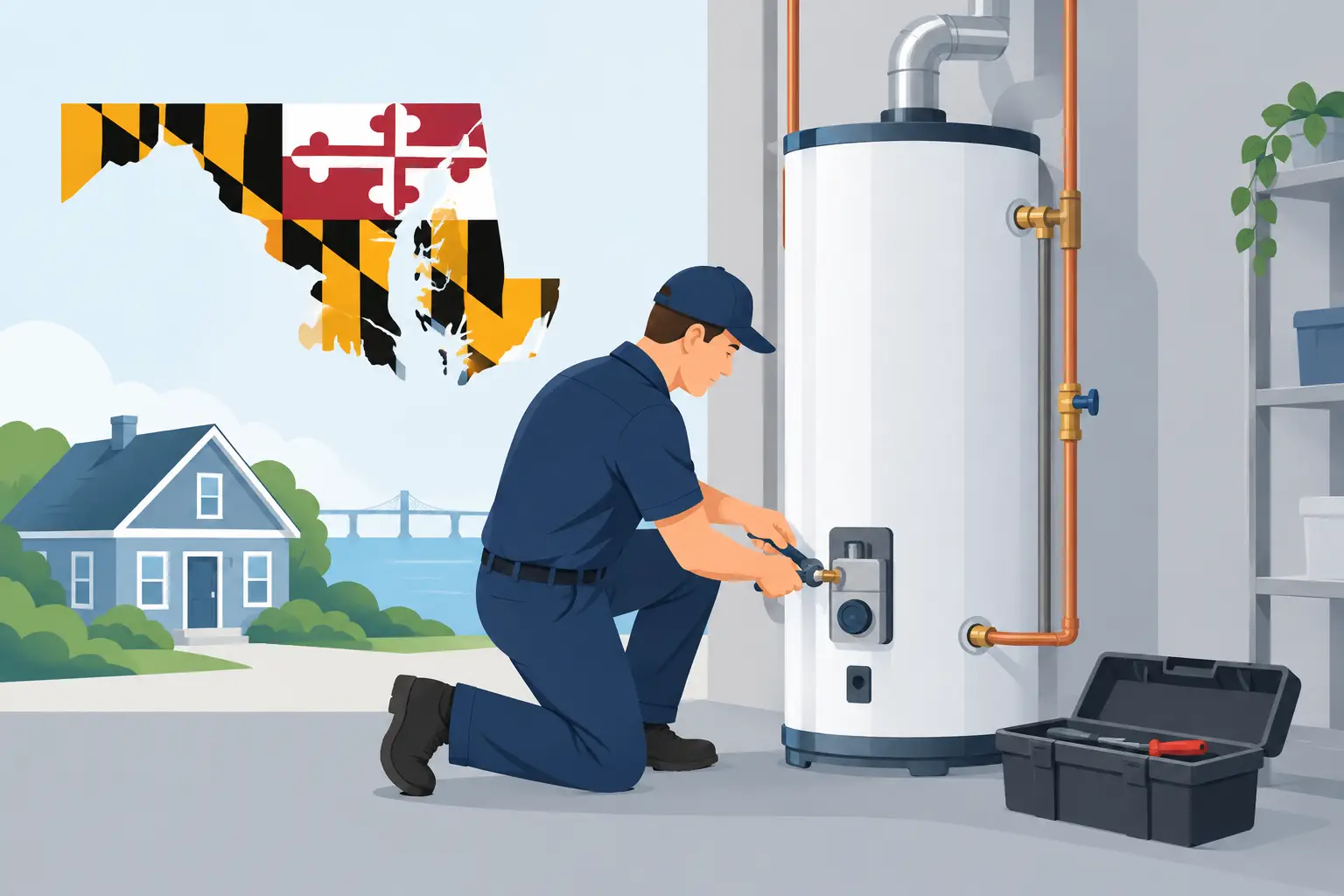
Water Heater Installation Guide for Maryland Homes
A leaking tank or a cold shower can turn a routine morning into an urgent home repair. This water heater installation guide explains what Maryland homeowners should expect when replacing a water heater, from choosing the right equipment to meeting local code requirements and protecting the warranty.
A water heater is not a one-size-fits-all purchase. The correct unit depends on household demand, available fuel, venting, electrical capacity, installation space, and the condition of the existing plumbing. Getting those details right before installation helps prevent weak hot-water performance, higher energy bills, and avoidable safety issues.
Start With the Right Water Heater
The first decision is whether a traditional storage-tank water heater or a tankless unit fits your property. A tank water heater stores a set amount of hot water, commonly 40, 50, or 75 gallons in residential applications. It is often the most straightforward replacement when an existing tank is nearing the end of its service life.
Tankless water heaters heat water as it passes through the unit. They save floor space and can provide a continuous supply when they are properly sized. However, tankless equipment may require changes to gas piping, venting, electrical service, or water lines. The lower operating cost can be appealing, but the upfront installation cost is usually higher.
Fuel type matters just as much. Natural gas units generally recover hot water faster than standard electric tank models, while electric water heaters can be a practical choice where gas service or approved venting is unavailable. Heat pump water heaters can be highly efficient, but they need adequate surrounding air space and may cool or dehumidify the installation area. That can work well in many basements or utility rooms, but it is not ideal for every location.
For households, sizing should reflect real demand rather than simply matching the old tank. Consider how many people live in the home, whether showers overlap in the morning, how often laundry and dishwashing run, and whether large soaking tubs are used. For tankless equipment, the key measurement is flow rate at the expected temperature rise. A unit that looks efficient on paper can still disappoint if it cannot keep up with simultaneous showers and appliances.
What a Professional Water Heater Installation Guide Should Cover
A proper installation begins with an on-site assessment. The technician confirms the unit size, fuel type, location, venting route, plumbing connections, and shutoff access. They should also inspect the surrounding area for drainage, combustion-air requirements, clearances, and signs that related components need attention.
For a tank replacement, the existing unit is safely shut down, disconnected, drained, and removed. The new water heater is positioned on a stable surface with the manufacturer-required clearances. In areas where required, a drain pan is installed beneath the tank and piped to an appropriate discharge point. This simple detail can limit damage if the tank or a fitting leaks.
The cold-water supply line, hot-water outlet, shutoff valve, and temperature and pressure relief valve all need correct installation. The relief valve is a critical safety device. Its discharge pipe must terminate in an approved location and should never be capped, plugged, or reduced in size.
Gas water heaters require additional attention. The gas connection must be properly sized, secured, and tested for leaks. Venting must match the equipment type and comply with the manufacturer instructions and local code. Atmospheric-vent models, power-vent units, direct-vent systems, and high-efficiency condensing water heaters have different venting requirements. Reusing an old vent without verifying compatibility can create a serious combustion or carbon monoxide risk.
Electric water heaters require correctly sized wiring, overcurrent protection, grounding, and disconnect access. A technician may need to confirm that the electrical panel can support the new equipment, particularly when changing from a standard electric tank to a heat pump or tankless model.
Once connections are complete, the system is filled, purged of air, tested, and set to a safe operating temperature. Around 120 degrees Fahrenheit is a common household setting because it balances comfort, energy use, and scald prevention. Individual needs vary, especially in homes with young children, older adults, or occupants with medical considerations.
Permits and Code Compliance Are Part of the Job
Water heater replacement may require a permit in Edgewater, Annapolis, and other Maryland jurisdictions. Requirements can vary based on the location, the type of equipment, and whether the project involves changes to gas lines, electrical circuits, plumbing, or venting.
Permits are not just paperwork. They help ensure the installation meets safety standards for pressure relief, combustion air, exhaust venting, seismic or equipment restraint requirements where applicable, drainage, and electrical protection. A permitted installation also creates documentation that can be helpful during a home sale, insurance review, or warranty claim.
Professional installers understand that code compliance is more than fitting the new appliance into the old footprint. For example, a new high-efficiency gas unit may need different vent materials than the appliance it replaces. A new heat pump water heater may require a condensate drain. A move to tankless equipment can require a larger gas line. These details should be assessed before equipment is ordered, not discovered after the old unit is already removed.
When Replacement Makes More Sense Than Repair
Most conventional tank water heaters last roughly eight to 12 years, although water quality, maintenance history, and usage can shorten or extend that range. The serial number often indicates the manufacturing date, which helps put repair decisions in context.
A repair can be worthwhile when the problem is limited to a heating element, thermostat, igniter, valve, or other serviceable component. Replacement is often the wiser investment when a tank is leaking, heavily corroded, or nearing the end of its expected life with repeated repair needs.
Watch for rusty water, rumbling or popping sounds, moisture around the base of the tank, inconsistent hot-water temperatures, or a noticeable increase in energy costs. These symptoms do not always mean immediate failure, but they are good reasons to schedule an inspection before a small problem becomes an emergency.
Why DIY Installation Can Create Expensive Problems
Replacing a water heater can look simple, especially when the new unit is similar to the old one. The risk lies in the connections and requirements that are easy to overlook. Incorrect gas piping, improper venting, missing relief-valve discharge piping, undersized electrical wiring, or an unapproved drain setup can compromise safety and lead to failed inspections, water damage, or voided manufacturer warranties.
DIY work may also miss underlying issues. A corroded shutoff valve, aging expansion tank, deteriorated vent connector, or insufficient gas supply can affect the performance of the new unit. An experienced technician evaluates the complete installation rather than treating the water heater as an isolated appliance.
If your water heater has failed after hours, shut off the fuel or electrical power if it is safe to do so, close the cold-water supply valve, and avoid using hot-water fixtures until the situation is assessed. If there is active flooding, gas odor, or suspected carbon monoxide exposure, treat it as an emergency and contact the appropriate emergency services or utility provider.
Plan for Long-Term Performance
Installation is the right time to think beyond day one. Ask about warranty coverage, expected maintenance, water quality, and energy use. Tank water heaters benefit from periodic flushing to reduce sediment buildup, while tankless systems may need descaling in areas with hard water. An expansion tank may also be needed when the home has a closed plumbing system.
Keep the area around the water heater clear, check periodically for leaks, and do not block combustion-air openings or service access. For commercial properties, maintenance planning is especially valuable because a hot-water outage can affect tenants, employees, customers, kitchens, restrooms, and daily operations.
A dependable installation should give you more than hot water. It should give you confidence that the equipment is sized correctly, installed safely, permitted when required, and ready to serve your home or business for years. For homeowners and property managers who want clear answers and reliable service, Bethany Air can help make the replacement process straightforward.
