

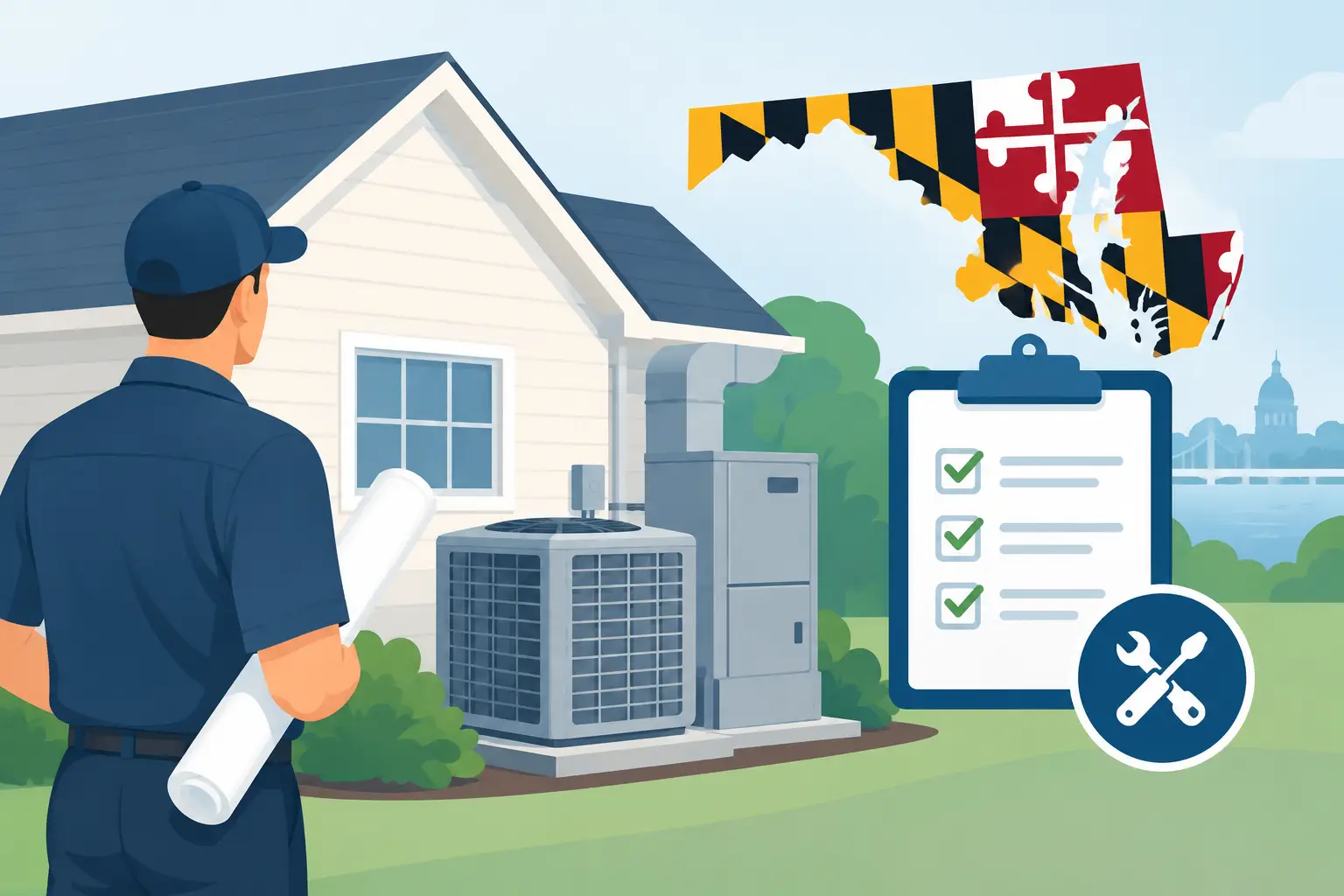
When Do Maryland HVAC Permits Apply to You?
A new heat pump, furnace, air conditioner, boiler, or water heater should bring better comfort, not an avoidable problem at inspection time. HVAC permits are often required for equipment replacements and new installations in Maryland, but the exact rules depend on the jurisdiction, the scope of work, and the equipment involved. Knowing what to expect before work begins can protect your property, your budget, and your peace of mind.
For homeowners, permits can feel like one more delay in an already stressful project. For property managers and business owners, missed permits can complicate tenant improvements, insurance questions, inspections, and future sales. The good news is that a qualified HVAC contractor can usually handle the process efficiently and keep the project moving.
When Are HVAC Permits Required?
In many Maryland jurisdictions, a permit is required when HVAC work involves installing, replacing, relocating, or significantly modifying equipment. That commonly includes central air conditioning systems, furnaces, heat pumps, boilers, air handlers, ductless mini-splits, rooftop units, and water heaters.
A like-for-like replacement may still require a permit. Replacing an older air conditioner with a new unit, for example, is not always treated as a simple service call. The new equipment may have different electrical requirements, refrigerant standards, efficiency ratings, venting needs, drainage requirements, or load calculations. The permit and inspection process helps verify that these details meet current code.
Routine maintenance and many repairs generally do not require permits. Replacing a thermostat, cleaning a system, changing a capacitor, repairing a refrigerant leak, or replacing a failed blower motor is typically repair work. However, the line can change if a repair becomes a larger alteration, such as replacing major electrical components or rerouting gas piping.
Local requirements vary. Anne Arundel County, the City of Annapolis, and neighboring Maryland communities may have different application procedures, fees, review timelines, and inspection steps. Commercial work can also trigger additional reviews based on occupancy, system size, rooftop access, fire protection, ventilation, and building use.
Why HVAC Permits Matter Beyond Paperwork
Permits are not simply an administrative box to check. They create a record that the work was completed under local building and mechanical requirements. That matters because heating and cooling equipment affects electrical safety, combustion safety, indoor air quality, moisture control, and energy use.
A proper inspection may look at equipment clearances, disconnects, wiring, condensate drainage, duct connections, gas piping, venting, refrigerant line installation, and smoke or carbon monoxide safety requirements where applicable. The details differ by system, but the goal is consistent: make sure the installation is safe and appropriate for the building.
Skipping required permits may create problems later. A buyer’s home inspector may flag an unpermitted system replacement. A commercial property owner may face questions during a lease renewal, renovation, or code inspection. In some situations, an insurer may ask whether major work was completed according to applicable codes after a claim.
There is also a practical performance benefit. Permitting encourages contractors to account for more than the equipment model. A correctly sized system, properly installed drain line, suitable electrical connection, and safe venting arrangement all affect comfort, reliability, and operating cost over the life of the system.
Who Pulls the Permit?
For a professional HVAC installation, the contractor should normally obtain the required permit. The contractor is responsible for submitting the appropriate information, coordinating inspections, and completing the work in a way that meets the approved scope.
Homeowners can sometimes pull permits themselves, depending on local rules. That option may sound less expensive, but it can shift responsibility to the property owner. If plans change, an inspection fails, or the jurisdiction requests additional documentation, the homeowner may need to manage those issues directly. For most major HVAC replacements, working with a licensed and insured contractor is the clearer path.
For commercial projects, permit responsibility should be established before the job starts. Property owners, general contractors, tenants, and mechanical contractors may all have roles in the project. Clear communication avoids a common issue: equipment arrives on site before permits or approvals are in place.
Ask your contractor directly whether a permit is required, who will obtain it, whether permit fees are included in the proposal, and who will schedule final inspection. Straight answers before signing help prevent surprises.
What to Expect From the Permit Process
The process is usually more manageable than property owners expect. Once the equipment and scope are confirmed, the contractor submits an application to the local authority having jurisdiction. Depending on the project, the application may identify the equipment type, capacity, location, electrical information, fuel source, and contractor license details.
For a straightforward residential replacement, approval may be relatively quick. More complex work can take longer, especially when it includes new ductwork, electrical upgrades, structural changes, gas line modifications, or a change in system type. Converting from a furnace and air conditioner to a heat pump, for example, may require a closer look at electrical capacity and backup heat needs.
After installation, an inspector may visit the property to verify the completed work. The timing varies by jurisdiction and project. Some inspections occur after rough-in work, while others take place at the end of a replacement installation. A reputable contractor will let you know what access is needed and what happens if the inspector requests a correction.
An inspection correction is not necessarily a sign of poor work. Inspectors may request a label, a minor adjustment, additional documentation, or a code-specific update. What matters is that the contractor responds promptly and brings the installation into compliance.
HVAC Permit Questions to Ask Before Installation
Before approving an estimate, make sure the proposal clearly identifies the equipment being installed and the work included. If a permit is needed, you should understand whether the fee is included and whether the contractor will manage the process from application through final approval.
It also helps to ask about work that may fall outside the initial scope. Older homes sometimes reveal issues once equipment is removed, such as an undersized disconnect, deteriorated duct connection, inadequate combustion air, or a condensate drain that no longer meets current requirements. These items may require additional work, but a dependable contractor should explain the reason, the options, and the cost before proceeding.
For business owners and facility managers, ask whether the project affects operations, rooftop access, tenant schedules, or required inspections by other departments. A planned replacement is far easier to coordinate than an emergency outage, particularly in a restaurant, office, medical facility, or multifamily property.
Avoiding Permit Problems During an HVAC Project
The biggest warning sign is a contractor who dismisses permit requirements without first reviewing the job. Not every repair needs a permit, but major equipment work deserves a clear answer. Be cautious if a low estimate excludes permits without explanation or if someone suggests that permits are unnecessary simply because the replacement looks similar to the old unit.
Keep copies of your proposal, permit documentation, equipment information, warranty details, and final inspection approval. These records are useful for future maintenance, warranty service, property transactions, and insurance documentation. They also give the next technician a clearer picture of what was installed and when.
Bethany Air helps homeowners and commercial clients plan HVAC projects with licensed expertise, transparent communication, and attention to municipal requirements. Whether the job involves a system replacement, new ductwork, a heat pump upgrade, or a commercial unit, proper preparation helps prevent avoidable delays.
The right installation is more than a new piece of equipment. It is a properly planned system that is safe, code-conscious, and ready to deliver dependable comfort for years to come.
