

Furnace Pilot Light Problems: Causes and Fixes
A pilot light that goes out on a cold Maryland night is more than an inconvenience. Furnace pilot light problems can stop your heat completely, signal a safety concern, or point to a part that needs professional attention. The good news is that many causes are identifiable, but gas-fired heating equipment deserves a careful response.
Before attempting any reset, pay attention to what you see and smell. A weak flame, repeated shutdowns, unusual burner behavior, or the odor of gas each call for a different next step. Knowing the difference can help protect your household, your property, and your heating system.
First, Confirm That Your Furnace Has a Pilot Light
Not every furnace uses a standing pilot light. Older gas furnaces commonly have a small flame that stays lit throughout the heating season. Many newer furnaces use electronic ignition instead, such as a hot surface igniter or intermittent pilot. These systems do not have a flame you manually relight.
If you have a newer furnace that will not start, the problem may be an igniter, flame sensor, pressure switch, thermostat setting, electrical issue, or control board rather than a pilot light. Checking your owner’s manual can clarify the type of ignition system you have. If you are unsure, an HVAC technician can identify the equipment and diagnose the issue without guesswork.
Common Furnace Pilot Light Problems
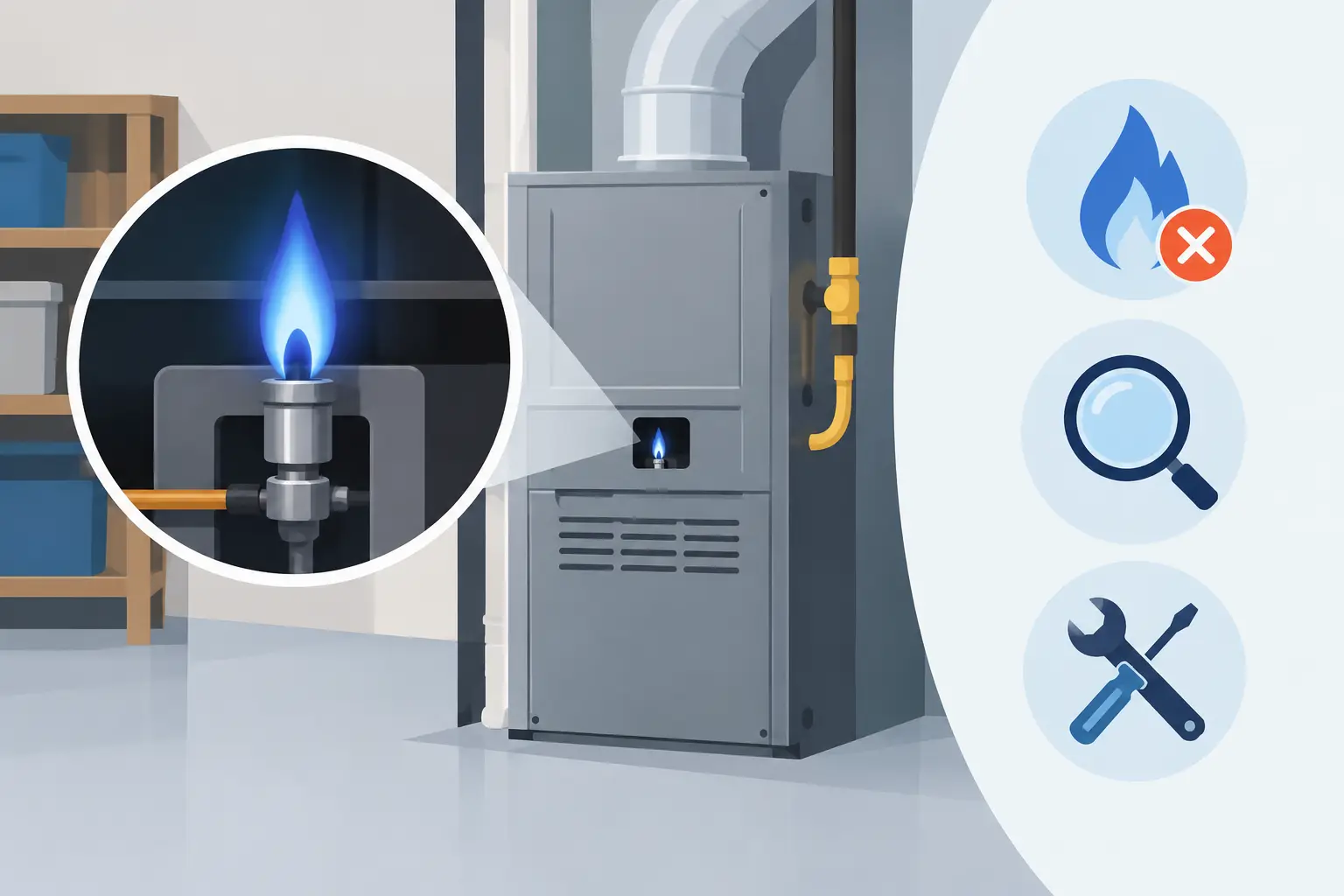
A pilot light should burn steadily with a mostly blue flame. A small amount of yellow at the tip may occur, but a flame that is weak, yellow, flickering, or repeatedly goes out deserves attention.
A Dirty or Clogged Pilot Opening
Dust, lint, corrosion, and debris can restrict the small opening that supplies gas to the pilot. This often creates a weak flame that cannot properly heat the safety sensor. The pilot may light briefly, then go out when you release the control knob.
Cleaning a pilot assembly is more delicate than it appears. Poking at the opening with a pin or wire can damage or enlarge it, which may affect combustion. A qualified technician can clean the assembly properly and check for related issues, including contamination in the burner compartment.
A Failing Thermocouple
On many standing-pilot furnaces, a thermocouple is a small metal sensor positioned in the pilot flame. Its job is to confirm that a flame is present. If the pilot goes out, the thermocouple signals the gas valve to shut off gas flow as a safety measure.
When a thermocouple is dirty, loose, worn, or failing, it may not sense heat correctly. You may be able to light the pilot while holding the button down, only to have it go out as soon as you release it. Replacing or adjusting this component is generally a straightforward repair for a trained HVAC professional, but the correct part and positioning matter.
Drafts or Airflow Around the Furnace
A pilot flame can be blown out by a draft caused by an open panel, damaged venting, gaps near the appliance, or air movement in the mechanical room. This is especially possible in utility areas, basements, garages, and commercial equipment spaces.
Do not block required combustion-air openings to solve a draft issue. Gas appliances need proper airflow to operate safely. Instead, have the furnace cabinet, venting, and surrounding installation evaluated to find the source of the airflow.
Gas Supply or Gas Valve Issues
If the pilot will not light at all, the furnace may not be receiving enough gas. A closed shutoff valve, interrupted utility service, a problem with a propane supply, or a malfunctioning gas control valve can all be involved.
Check whether other gas appliances are working, but do not repeatedly cycle furnace controls in an effort to force ignition. If the gas supply appears normal and the pilot still will not light, it is time for professional diagnosis. Gas valve repairs and replacements should be handled by a licensed technician.
A Yellow Flame or Soot Buildup
A healthy pilot flame is usually blue and stable. A yellow, lazy flame can indicate incomplete combustion, a dirty pilot assembly, or an air-to-fuel issue. Soot around the burner area is another warning sign that should not be ignored.
This is not a situation for a quick adjustment. Incomplete combustion can affect furnace performance and indoor air quality. A technician should inspect the burner, pilot assembly, heat exchanger area, and venting before the equipment returns to normal operation.
When It Is Safe to Relight a Pilot Light
If your furnace manual provides relighting instructions, there is no gas odor, and the pilot simply went out once, you may be able to follow the manufacturer’s procedure. Most systems require turning the control to OFF, waiting several minutes for unburned gas to clear, then using the PILOT setting while holding the control and lighting the pilot as directed.
Stay with the appliance while completing the process. If the pilot does not remain lit after one or two careful attempts, stop. Repeated attempts can allow gas to accumulate, and the underlying problem still needs to be addressed.
Never use a lighter or match if the manufacturer’s instructions do not call for it. Do not bypass safety controls, tape down a button, or attempt to modify the furnace to keep a pilot running. Those temporary workarounds can create a serious hazard.
What to Do If You Smell Gas
The smell of natural gas is often described as sulfur-like or similar to rotten eggs. If you smell gas in or around your home or business, do not try to relight the pilot or operate the furnace.
Leave the building immediately with everyone inside. Avoid switches, phones, appliances, vehicles, flames, and anything that could create a spark while you are in the area. Once you are safely away from the building, call your gas utility or emergency services according to local guidance. A qualified professional should inspect the system before anyone restarts the furnace.
Why a Pilot Light Keeps Going Out
A pilot that goes out once after a severe draft may not mean the furnace is failing. A pilot that goes out repeatedly is different. It usually means the flame is not strong enough, the thermocouple is not proving the flame, or a venting, combustion, or gas-control issue is interfering with operation.
The trade-off in delaying a repair is simple: you may save a service call today, but risk losing heat during colder weather or allowing a minor component problem to become a larger repair. For rental properties and commercial buildings, repeated pilot outages can also create tenant comfort issues, frozen-pipe exposure, and avoidable disruptions.
Preventing Future Pilot Light Issues
Preventive furnace maintenance is the most reliable way to catch pilot and ignition concerns before they become a no-heat call. During a professional heating tune-up, technicians can inspect the pilot assembly or ignition system, clean burners as needed, test safety controls, check gas pressure, inspect venting, and confirm that the furnace cycles correctly.
Homeowners can also help by keeping the area around the furnace clean and clear. Do not store paint, gasoline, cardboard, cleaning chemicals, or other combustible materials near heating equipment. Replace filters on schedule, since restricted airflow can contribute to overheating and broader furnace performance problems, even when it is not the direct cause of a pilot outage.
Carbon monoxide detectors are another essential layer of protection. Install them in appropriate locations, test them regularly, and replace batteries or units according to the manufacturer’s recommendations. A detector is not a substitute for furnace maintenance, but it can provide an early warning when a combustion-related problem develops.
Call for Reliable Furnace Repair
A pilot light problem may be caused by a simple dirty sensor, but it can also involve gas controls, combustion, or venting. The safest choice is to stop troubleshooting when the pilot will not stay lit, the flame looks abnormal, or you have any concern about gas or carbon monoxide.
Bethany Air provides dependable furnace repair and maintenance for homeowners and businesses throughout the Edgewater and Annapolis area. Our licensed, insured technicians can identify the cause, explain the repair clearly, and help keep your heating system ready for the season. A steady blue pilot flame is small, but it plays a big role in dependable heat and peace of mind.
