

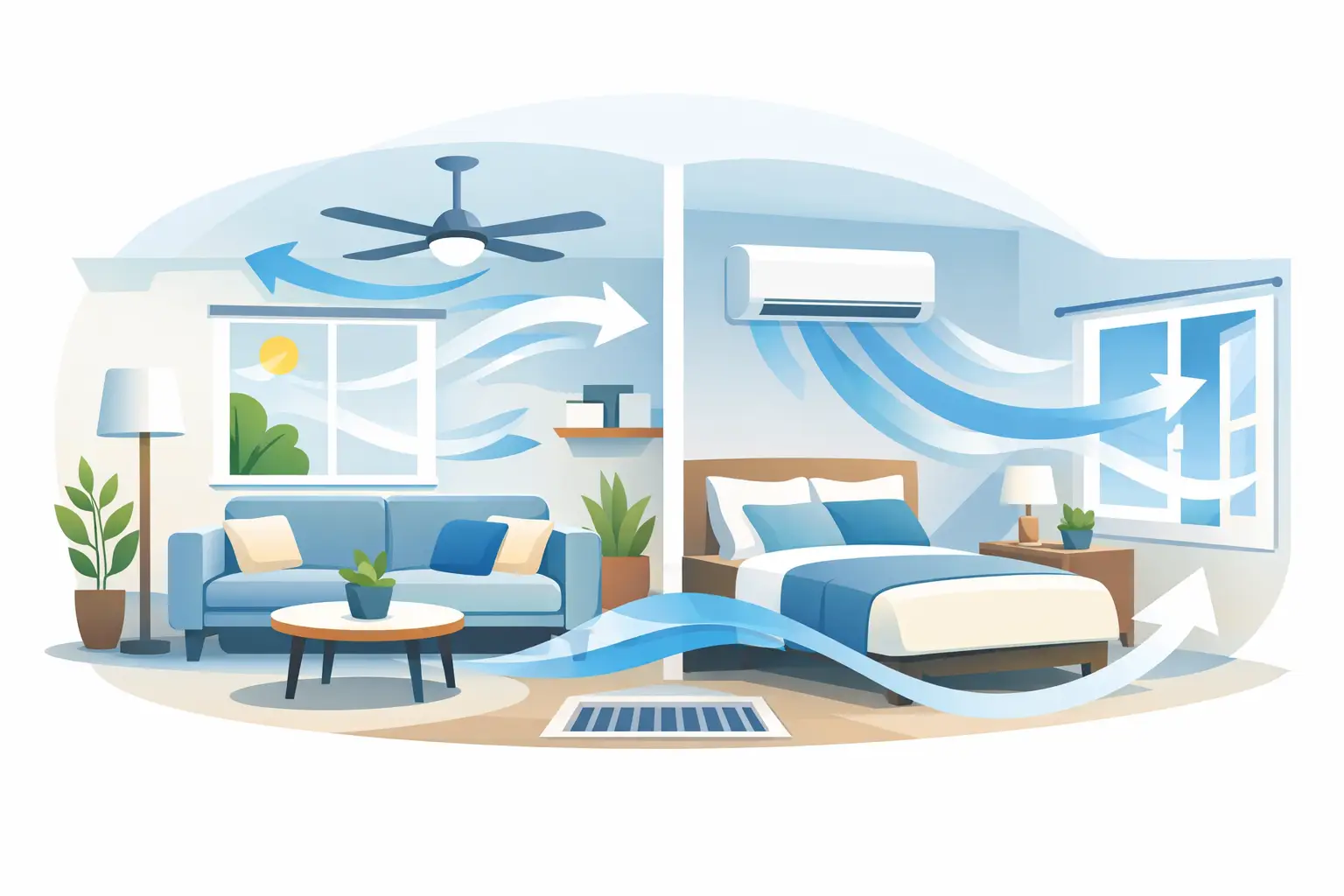
How to Improve Indoor Airflow in Your Home
A bedroom that stays warm while the rest of the house feels cool is not just an annoyance. It is often a sign that air is not moving where it needs to go. Learning how to improve indoor airflow can make rooms feel more consistent, reduce strain on HVAC equipment, and help your family breathe more comfortably.
Airflow problems can be simple, such as a blocked supply vent, or more involved, such as leaky ductwork or an improperly sized system. The right fix depends on what is causing the imbalance. Start with the practical checks below, then bring in an experienced HVAC technician when the issue points to your equipment or duct system.
Start With the Air Your HVAC System Can Move
Your heating and cooling system can only circulate as much air as it can draw in and push back through the home. When that path is restricted, comfort drops quickly. Before adjusting your thermostat or buying another fan, check the parts of your system that most often slow down circulation.
Replace the Air Filter on Schedule
A clogged filter is one of the most common causes of weak indoor airflow. It makes the blower work harder to pull air through the system, which can leave rooms stuffy and contribute to higher energy use. In severe cases, restricted airflow can lead to frozen air conditioner coils or overheating problems during the heating season.
Check the filter every month, particularly during Maryland’s hot, humid summers and colder winter months. Many standard filters need replacement every one to three months. Homes with pets, smokers, recent renovation work, or family members with allergies may need more frequent changes.
Do not assume that the highest-rated filter is always the best choice. Very dense filters can restrict airflow if the system was not designed for them. A technician can recommend a filter rating that balances filtration needs with your equipment’s airflow requirements.
Keep Supply and Return Vents Open and Clear
Supply vents deliver conditioned air into a room. Return vents pull air back toward the HVAC system to be heated or cooled again. Both need room to do their jobs.
Walk through the house and make sure furniture, rugs, drapes, storage bins, and other items are not blocking vents. A sofa positioned directly over a return grille can affect circulation throughout more than one room. Closed interior doors can also limit airflow in homes where rooms do not have dedicated return vents.
It may seem logical to close vents in unused rooms to save energy, but this can create pressure problems in the duct system. Most central HVAC systems are designed to operate with their vents open. Closing multiple vents can reduce airflow across the system and may put extra stress on the blower. If certain rooms are consistently unused, ask an HVAC professional about zoning or other long-term options instead.
Use Fans to Improve Indoor Airflow Where It Matters
Fans do not lower the actual temperature of a room, but they help people feel cooler by moving air across the skin. They can also help break up stagnant air in rooms that receive less supply air.
Set ceiling fans to rotate counterclockwise in summer. This pushes air downward and creates a cooling breeze. In winter, set them clockwise at a low speed to gently circulate warm air that collects near the ceiling without creating a draft.
Portable fans can help, but placement matters. Rather than aiming a fan only at a person, use it to support the direction of airflow across the room. For example, a fan placed near a hallway can help move conditioned air toward a bedroom that tends to feel stale. During mild weather, use window fans strategically: one pulling cooler air in on the shaded side of the home and another exhausting warmer air from the opposite side.
Open windows only when outdoor conditions support the goal. On a humid summer day, bringing in outside air may make your home feel more uncomfortable and increase the workload on your air conditioner. Pollen, wildfire smoke, and poor outdoor air quality are other good reasons to keep windows closed and rely on properly maintained mechanical ventilation instead.
Address Common Obstacles to Balanced Airflow
Some airflow issues are caused by the home itself rather than the HVAC unit. Heat from direct sun, air leaks, poor insulation, and room additions can all create uneven comfort.
Close blinds or shades on sun-facing windows during the hottest part of the day. This reduces solar heat gain before your air conditioner has to remove it. Weatherstripping around doors and windows helps keep conditioned air inside, while attic insulation can make upstairs rooms less prone to summer heat buildup and winter heat loss.
Large furniture arrangements deserve attention as well. Bookcases, entertainment centers, and beds can prevent air from reaching the center of a room when they cover registers. Leave a clear path around vents whenever possible. If a register is located under furniture, a properly fitted vent deflector may help direct air into the room, but it will not solve an underlying duct or system problem.
Check Whether Your Ductwork Is the Real Problem
Ductwork is out of sight, so it is easy to overlook. Yet damaged, disconnected, undersized, or poorly designed ducts can be responsible for major comfort problems. Air can escape into an attic, crawl space, basement, or wall cavity before it ever reaches the rooms you need to heat or cool.
Warning signs include rooms that never reach the thermostat setting, noticeably weak air from certain registers, whistling noises, excessive dust, and utility bills that seem high for the season. Older homes and properties with additions are especially likely to have duct layouts that no longer match the building’s needs.
Duct sealing can improve delivery of conditioned air, but it should be done correctly. Duct tape is not a lasting solution for HVAC ducts despite its name. Professional sealing materials and proper inspection are needed to identify leaks, loose connections, and insulation gaps. In some cases, redesigning a section of ductwork is more effective than attempting repeated small repairs.
Make Sure the HVAC System Is Operating Properly
Weak airflow can originate inside the equipment. A dirty indoor coil, blower wheel, or condensate issue may restrict performance. A failing blower motor, incorrect blower speed, damaged belt in certain commercial equipment, or malfunctioning thermostat can also affect how air moves through a building.
For homeowners, a good first check is to compare airflow from several vents while the system is running. If airflow is weak throughout the home, the issue may be at the air handler, furnace, filter, or return side of the system. If only one area has poor airflow, the problem is more likely related to a branch duct, register, door position, or room-specific heat gain.
Commercial properties need a broader assessment. Office layouts, occupancy changes, server rooms, rooftop unit performance, and tenant improvements can all alter the original airflow design. A space that was comfortable when it was built may need balancing or equipment adjustments after its use changes.
Annual HVAC maintenance is one of the most reliable ways to catch these issues early. During a maintenance visit, technicians can inspect components that are not safe or practical for property owners to access, verify system operation, and identify developing concerns before they become a no-cooling or no-heat call.
Consider Long-Term Solutions for Persistent Hot and Cold Spots
When simple adjustments do not solve the problem, the answer may be a targeted upgrade. Zoning systems use separate controls to manage different areas of the building, making them useful for multi-level homes, rooms with strong sun exposure, or commercial spaces with varying occupancy. Dampers, additional returns, duct modifications, and upgraded thermostats may also help when selected for the specific layout.
A ductless mini split can be a practical option for a finished attic, garage conversion, addition, or other area that lacks effective ductwork. It provides independent comfort control without forcing an existing central system to handle a space it was never designed to serve.
System sizing matters too. An oversized air conditioner can cool quickly but may shut off before it circulates air adequately or removes enough humidity. An undersized system may run for long periods and still struggle to maintain comfort. Proper load calculations, not guesswork based on square footage alone, should guide replacement decisions.
If you have changed filters, cleared vents, and adjusted fan settings but certain rooms still feel stagnant, uneven, or uncomfortable, it is time for a professional evaluation. Bethany Air provides dependable HVAC and ductwork service for homeowners and businesses that need clear answers and reliable service they can count on. A careful inspection can identify the cause of the problem and help you choose a repair or improvement that supports comfort for the long run.
