

Best Ways to Reduce Humidity in Your Home
A Maryland summer can make a home feel sticky even when the thermostat says the temperature is comfortable. That clammy feeling, fogged windows, musty odors, and damp basement air are signs that moisture may be building up indoors. The best ways to reduce humidity combine everyday moisture control with properly operating HVAC equipment, especially during long stretches of hot, wet weather.
Indoor humidity is not only a comfort issue. Excess moisture can encourage mold growth, warp wood flooring, damage stored belongings, attract pests, and make your air conditioner work harder than it should. For most homes, a relative humidity level between 30% and 50% is a practical target. A simple hygrometer can show whether your concern is occasional or a persistent problem that needs professional attention.
Start by Finding Where the Moisture Is Coming From
Before buying a dehumidifier or turning the thermostat down, look for the source. Humidity can enter through outdoor air leaks, wet foundations, plumbing leaks, poor ventilation, and normal daily activities such as cooking, showering, and drying clothes. A home that feels damp throughout may have a whole-house issue. A single humid bathroom, laundry room, or basement often points to a more localized cause.
Pay attention to where and when the problem appears. If windows sweat in the morning, indoor humidity may be high or the windows may be poorly insulated. If a basement smells musty after rain, water may be entering through the foundation or collecting around the exterior. If humidity rises while the air conditioner runs, the system may be oversized, short-cycling, improperly maintained, or dealing with an airflow issue.
Check these common trouble spots:
- Bathroom fans that are weak, noisy, or not vented outdoors
- Dryer vents that are loose, blocked, or discharged inside a garage or crawl space
- Plumbing drips below sinks, behind appliances, or near water heaters
- Foundation cracks, clogged gutters, poor grading, and wet crawl spaces
- Air leaks around doors, windows, attic penetrations, and ductwork
Correcting the source is more effective than repeatedly treating the symptom. A portable dehumidifier can help protect a room while repairs are underway, but it cannot fix a hidden leak or poor drainage.
Use Ventilation Where Moisture Is Created
Bathrooms and kitchens produce a surprising amount of water vapor. Run the bathroom exhaust fan during every shower and leave it on for roughly 15 to 20 minutes afterward. The fan should vent outside, not into an attic, soffit, or other enclosed area where moisture can cause damage.
Use the kitchen range hood when boiling water, simmering food, or running the dishwasher. If possible, cover pots and avoid long, steamy cooking sessions without ventilation. In the laundry room, confirm that the dryer vent is clean, connected, and routed outdoors. A blocked dryer vent is a humidity concern, a fire safety concern, and a reason for longer drying cycles.
Opening windows can help on a dry, mild day, but it is usually the wrong solution during a Maryland heat wave or rainy spell. Outdoor air may carry more moisture into the house than it removes. Let the HVAC system and exhaust ventilation do the work when outdoor humidity is high.
Make Sure Your Air Conditioner Is Removing Moisture
Air conditioning does more than cool the air. As warm indoor air passes over the cold evaporator coil, moisture condenses and drains away. That process is why a properly sized, well-maintained system is one of the best ways to reduce humidity throughout the home.
However, an air conditioner cannot dehumidify effectively if it has a dirty filter, restricted airflow, a clogged condensate drain, low refrigerant, or other mechanical problems. Replace or clean filters on schedule, keep supply and return vents open, and arrange routine maintenance before the cooling season puts the system under heavy demand.
System sizing matters as well. An oversized air conditioner may cool the house quickly and shut off before it runs long enough to remove adequate moisture. An undersized unit may run constantly and still struggle on the hottest days. The right answer is not automatically a larger system. A qualified HVAC technician should evaluate the building, ductwork, insulation, windows, occupancy, and equipment performance before recommending replacement.
Avoid setting the thermostat extremely low just to make the air feel drier. This can raise energy costs, create uneven temperatures, and still fail to solve the underlying issue. A moderate setting, steady airflow, and equipment that is operating correctly generally provide better comfort.
Choose the Right Dehumidifier for the Space
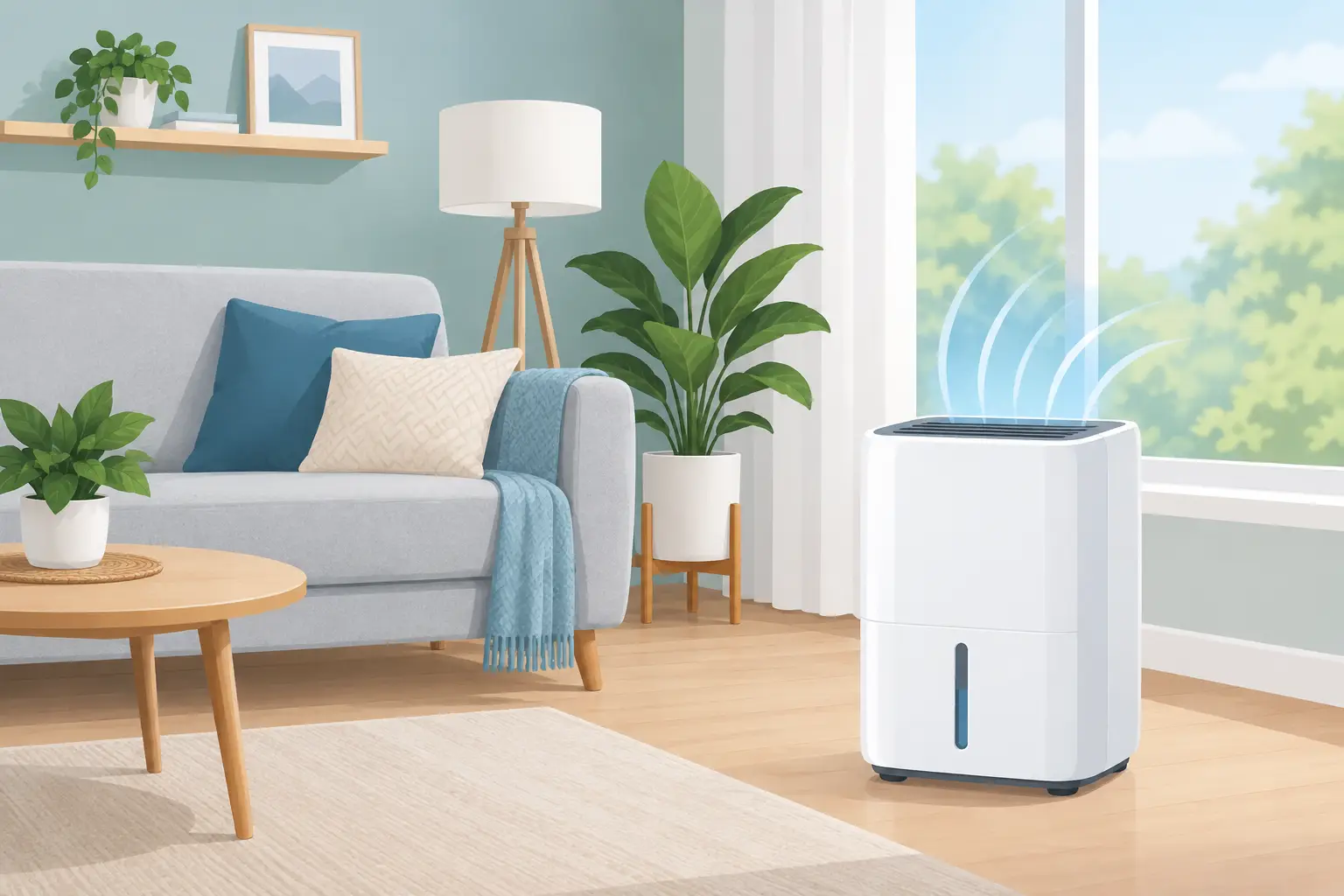
A portable dehumidifier is useful for a damp basement, a finished lower level, a laundry room, or a room with a temporary moisture issue. Select a unit based on the room size and the seriousness of the dampness, then place it where air can circulate around the appliance. Keep doors and windows closed while it runs, empty the bucket regularly, or use a properly installed drain connection if the model supports it.
Portable units have limits. They can be noisy, add a small amount of heat to the room, and require ongoing cleaning and maintenance. If several rooms feel damp or the unit runs continuously without improving conditions, a whole-home dehumidifier may be the better fit.
A whole-home dehumidifier works with the HVAC system to manage moisture across the house. It is especially helpful in homes with finished basements, crawl spaces, many occupants, or persistent summer humidity. It can also improve comfort without requiring you to lower the thermostat unnecessarily. The best equipment choice depends on your home’s layout, moisture load, and existing HVAC system.
Protect the Basement, Crawl Space, and Building Exterior
Below-grade spaces are common sources of indoor moisture. Start outside by making sure gutters are clear, downspouts direct water away from the foundation, and soil slopes away from the home. Water that pools near exterior walls can eventually find its way indoors.
Inside, watch for damp insulation, peeling paint, white mineral deposits on masonry, or standing water. Crawl spaces may need a vapor barrier, drainage improvements, sealing, or conditioned air management. These are building-envelope concerns as much as HVAC concerns, and they should be addressed before mold or structural damage spreads.
Keep basement storage off the floor and away from exterior walls when possible. Cardboard boxes absorb moisture easily, so plastic storage bins are often a better choice for seasonal belongings. If you notice visible mold, recurring water intrusion, or a strong musty odor, do not cover it up with fragrance products. Identify and correct the moisture problem first.
Do Not Overlook Ductwork and Air Leaks
Leaky ducts in an attic, crawl space, or garage can pull humid outdoor air into the system and distribute it through the building. Duct leaks also waste cooled air and make rooms harder to balance. Damaged insulation around ducts can lead to condensation, particularly in humid spaces.
Air leaks around the home can have a similar effect. Weatherstripping doors, sealing obvious gaps, and keeping attic access properly sealed can reduce the amount of humid outdoor air entering the home. These improvements work best alongside proper ventilation. The goal is not to trap stale indoor air, but to control where air enters and leaves.
For commercial properties, humidity problems may involve rooftop units, outside-air settings, exhaust systems, building occupancy, or after-hours schedules. Facility managers should treat persistent humidity as an operational issue, not simply a comfort complaint. Moisture can affect inventory, electronics, flooring, tenant satisfaction, and indoor air quality.
When High Humidity Calls for HVAC Service
Schedule an evaluation if your home stays above 60% relative humidity for extended periods, the air conditioner runs but rooms still feel sticky, condensate backs up, or mold and mildew return after cleaning. Water stains near vents, unusual system cycling, and ice on refrigerant lines also deserve prompt attention.
A trained technician can check cooling performance, airflow, drain operation, duct condition, thermostat settings, and equipment sizing. Bethany Air provides dependable HVAC and indoor air quality support for homeowners and businesses that need clear answers and reliable service.
A dry, comfortable home rarely depends on one quick fix. Start with the moisture source, use ventilation consistently, and make sure your cooling system is doing the job it was designed to do. Addressing humidity early can protect your comfort, your property, and your peace of mind through every humid Maryland season.
