

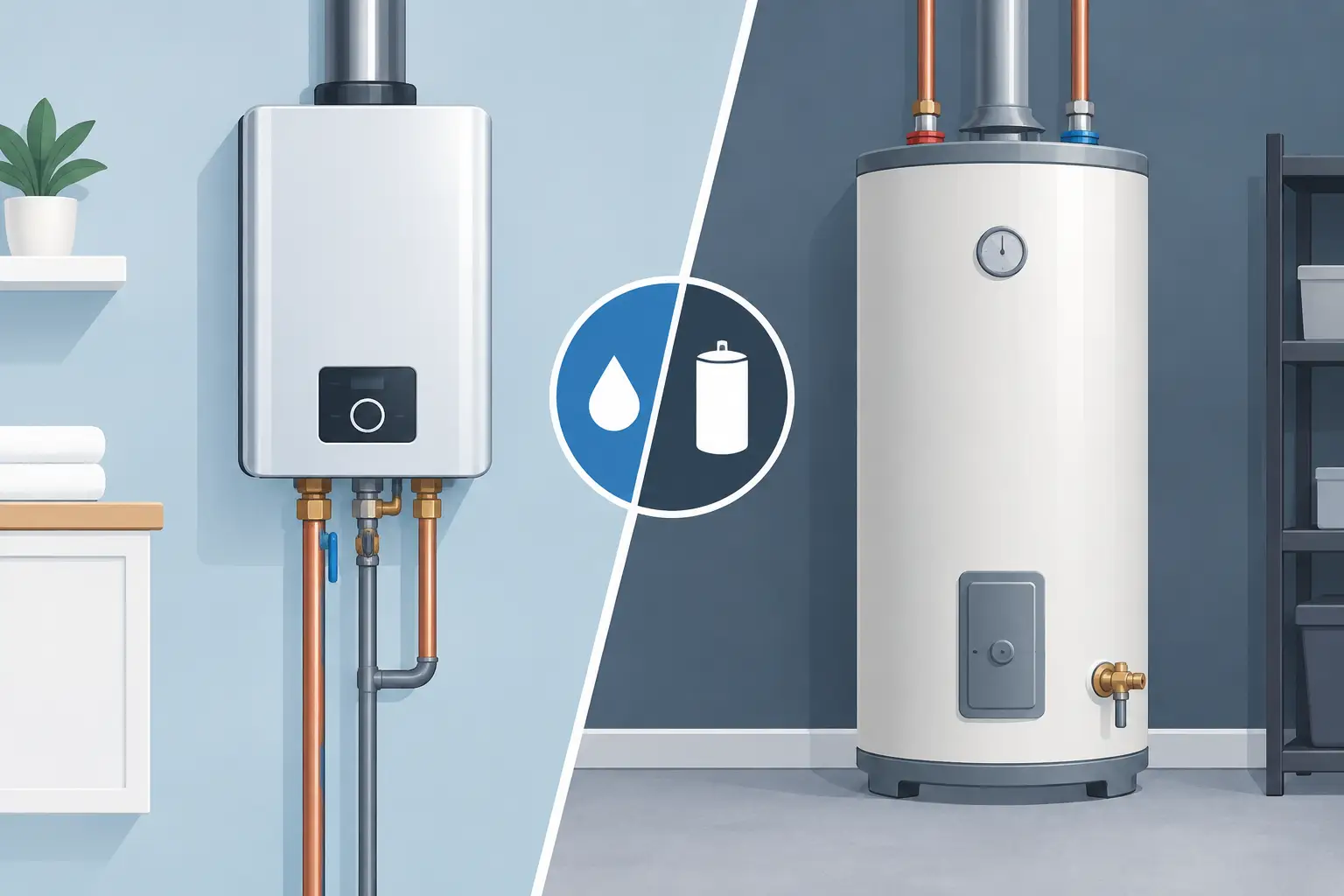
Tankless Versus Storage Water Heaters Compared
A water heater usually gets attention at the worst possible time: when the shower turns cold, the utility room floor is wet, or a tank begins making unfamiliar noises. When replacement is on the table, the choice between tankless versus storage water heaters affects more than your hot water. It can change your upfront cost, energy use, installation requirements, and how well the system serves your household on a busy morning.
For homeowners in Edgewater, Annapolis, and surrounding Maryland communities, there is no one-size-fits-all answer. A properly sized storage tank can be the most practical and affordable solution for many homes. A tankless unit can be an excellent long-term fit for households that want continuous hot water and have the right plumbing, fuel supply, and electrical capacity.
Tankless Versus Storage Water Heaters: The Basic Difference
A traditional storage water heater keeps a supply of water hot in an insulated tank, commonly ranging from 40 to 80 gallons in residential homes. When someone opens a hot-water faucet, the tank sends heated water through the plumbing while cold water enters the tank to be heated for the next use.
A tankless water heater heats water only when there is demand. Instead of holding a large volume of hot water, it uses a powerful gas burner or electric heating elements to warm water as it flows through the unit. Because it does not rely on stored hot water, it can provide hot water for an extended period – as long as the unit has enough capacity for the demand.
That difference sounds simple, but it creates important trade-offs in cost, performance, and installation.
When a Storage Water Heater Makes Sense
A storage water heater remains a dependable choice for many Maryland households. It is generally less expensive to purchase and install than a tankless model, especially when replacing an existing tank with a similar fuel type and size. For a homeowner managing an unexpected failure, that lower initial cost can matter.
Storage models also deliver a high volume of hot water quickly from the tank. This can work well when several fixtures run at once for a limited period, such as when family members shower back-to-back while the dishwasher is running. The key is selecting a tank with the right first-hour rating, which estimates how much hot water it can provide during a busy hour.
Installation tends to be more straightforward when a home already has the correct gas line, venting arrangement, or electrical circuit. This can reduce labor costs and avoid extensive modifications. Modern high-efficiency tank models also offer improved insulation and better energy performance than older units, so replacing an aging water heater can still lower operating costs.
The main limitation is recovery time. Once the available hot water is used, the tank needs time to heat a new supply. An undersized tank may leave the last person in the morning routine with lukewarm water. Tanks also take up floor space and eventually face corrosion risk, even with regular maintenance.
When a Tankless Water Heater Is Worth Considering
Tankless water heaters are often appealing for good reason. Their biggest advantage is continuous hot water. A correctly sized unit can keep producing hot water while people shower, laundry runs, or dishes are washed. For a household that frequently runs out of hot water, that capability can make a noticeable difference in daily comfort.
Because tankless units do not store dozens of gallons of heated water, they can reduce standby energy losses. They are compact and typically mount to a wall, freeing up utility-room or closet space. Their service life may also be longer than a conventional tank when they are professionally installed and properly maintained.
However, continuous hot water does not mean unlimited flow at every fixture. Tankless units are rated by gallons per minute, and incoming water temperature matters. In Maryland winters, colder groundwater requires the unit to work harder to reach the desired shower temperature. A unit that performs well for one shower in mild weather may have limits if two showers, a washing machine, and a kitchen faucet are all running on a cold January morning.
Gas tankless systems may require a larger gas line, dedicated venting, condensate drainage, and changes to the existing vent system. Electric tankless models can demand substantial electrical capacity, sometimes requiring panel upgrades. Those site-specific requirements are why tankless installations often cost more upfront than replacing a standard tank.
Compare the Costs Beyond the Purchase Price
The equipment price is only one part of the decision. Storage water heaters usually have the lower initial installation cost, while tankless systems often require a larger investment due to equipment, labor, venting, gas piping, or electrical work.
Over time, a tankless system may use less energy because it heats water only when needed. The actual savings depend on your household’s hot-water habits, local utility rates, fuel source, and the efficiency of the system being replaced. A family that uses a lot of hot water may see more value from a high-efficiency system than a small household with modest demand.
Maintenance should also be part of the budget. Storage tanks benefit from periodic inspection and flushing to help manage sediment, particularly where water conditions contribute to mineral buildup. Tankless units need regular descaling and service to protect the heat exchanger and maintain reliable performance. Skipping maintenance can shorten equipment life and reduce efficiency in either system.
Sizing Matters More Than the Label
The wrong size is one of the most common reasons homeowners are disappointed with a new water heater. A larger tank is not automatically better, and a higher-output tankless model is not automatically necessary. The right choice comes from how and when your home uses hot water.
For storage heaters, a technician considers household size, fixture use, peak demand, and first-hour rating. For tankless heaters, the calculation focuses on the number of simultaneous fixtures, their flow rates, and the temperature rise needed from the incoming water to the desired outlet temperature.
For example, a couple in a smaller home may be well served by a properly sized standard tank or a compact tankless unit. A larger family with multiple bathrooms may benefit from a high-capacity tankless system, a larger storage tank, or, in some cases, a hybrid approach. Homes with soaking tubs, large shower systems, or accessory living spaces deserve a more detailed assessment before selecting equipment.
Fuel Type and Your Existing Setup
Natural gas, propane, and electric water heaters all have different installation and operating considerations. If your home already has a compatible gas supply and venting system, a gas water heater replacement may be relatively simple. But changing from a standard gas tank to gas tankless can still require upgrades because tankless burners often need greater gas volume.
Electric storage water heaters are common and can be a practical option where gas is unavailable. Electric tankless units are compact, but their electrical demand can be significant. Before choosing one, a licensed professional should verify that your electrical panel and service can safely support it.
Permit compliance matters as well. Water heater installations may involve plumbing, gas, electrical, ventilation, and safety requirements that protect your home and the people in it. Working with licensed and insured technicians helps ensure the installation is completed correctly rather than creating a costly problem later.
Reliability, Safety, and Long-Term Care
Both types can provide years of dependable service when installed correctly and maintained on schedule. Storage tanks typically have a simpler design and familiar service needs. Tankless systems have more specialized components but offer strong performance when properly sized and maintained.
A water heater inspection should look beyond the unit itself. Technicians should evaluate shutoff valves, pressure relief protection, venting, gas connections, drainage, combustion safety where applicable, and signs of leaks or corrosion. A replacement is an opportunity to correct deficiencies that may have developed around an older installation.
Bethany Air helps homeowners evaluate the condition of their existing equipment and choose a water heater that fits their home, budget, and hot-water needs. Clear recommendations and transparent pricing make it easier to decide without guessing.
The Better Choice Is the One That Fits Your Home
Choose a storage water heater when you want a dependable, lower-upfront-cost replacement and your household’s hot-water demand is predictable. Consider tankless when continuous hot water, space savings, and long-term efficiency are priorities, and your home can support the installation requirements.
Before committing to either option, have a qualified technician assess your peak usage, incoming water temperature, fuel source, venting, and electrical capacity. The right water heater should make daily routines easier for years, not introduce another problem when the morning rush begins.
