

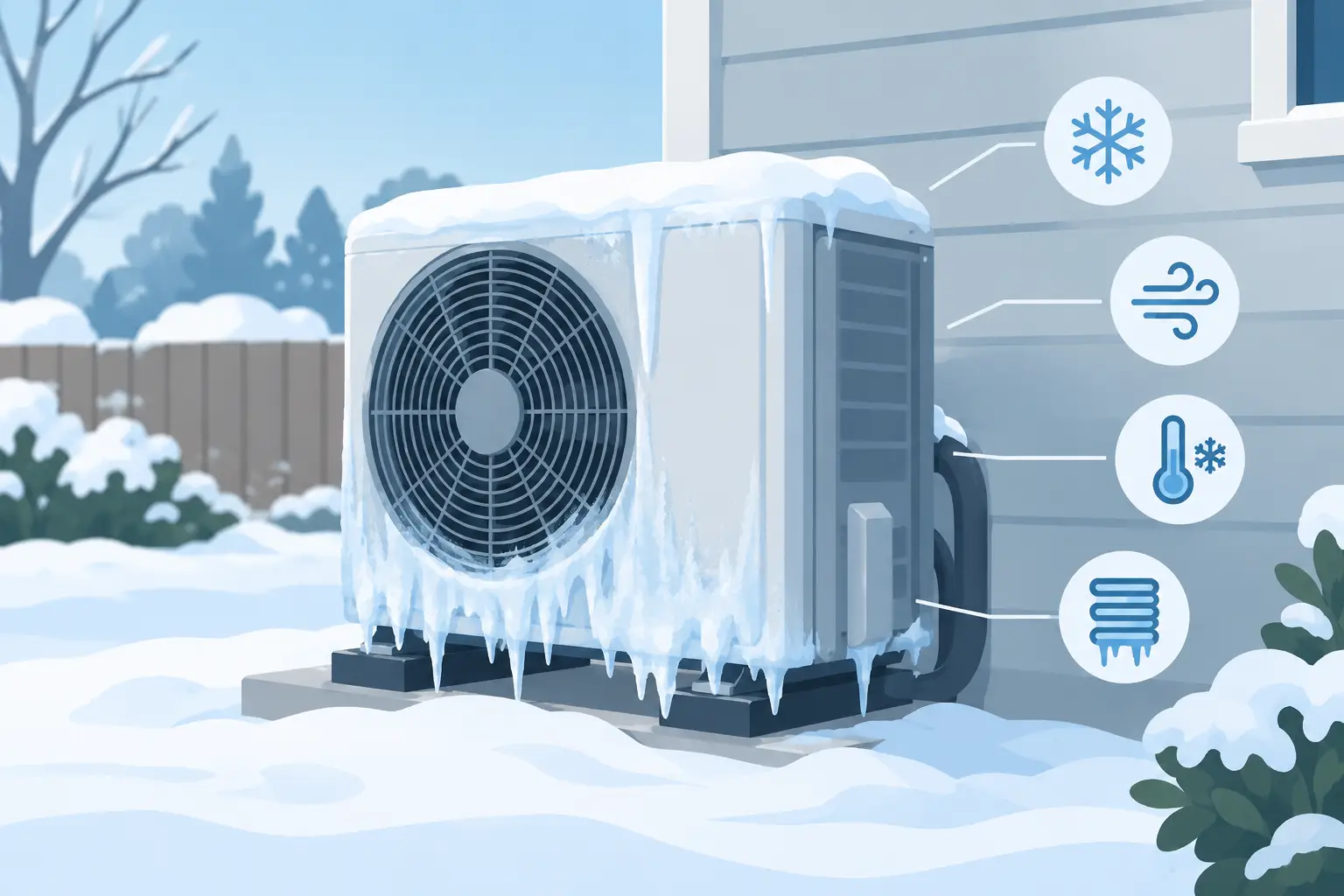
Why Does a Heat Pump Freeze? Common Causes
A heat pump working through a cold Maryland morning may develop a light coating of frost outdoors. That is usually part of normal operation. But when the outdoor unit is covered in thick ice, the fan is blocked, or your home is no longer heating properly, the question becomes urgent: why does a heat pump freeze?
The answer depends on what the ice looks like, where it is forming, and whether the system can clear it during its defrost cycle. Knowing the difference can help you avoid higher energy bills, equipment damage, and a cold home or building when you need reliable heat most.
A Little Frost Can Be Normal
In heating mode, a heat pump pulls heat from outdoor air and transfers it indoors. Even cold air contains heat energy. As the outdoor coil runs colder than the surrounding air, moisture in that air can condense and freeze on the coil.
Modern heat pumps are designed for this. Every so often, the system enters a defrost cycle. It temporarily reverses operation to warm the outdoor coil and melt accumulated frost. You may see steam rising from the unit, hear a change in sound, or notice the outdoor fan stop briefly. Those signs are generally normal.
A properly operating defrost cycle should clear ordinary frost within several minutes. Thick ice that remains on the coil, fan grille, refrigerant lines, or base of the unit is not normal. Neither is a unit that ices up repeatedly soon after defrosting.
Why Does a Heat Pump Freeze Over?
Heavy ice is usually a sign that the equipment cannot move enough air, cannot properly manage refrigerant, or cannot complete its defrost cycle. A technician should identify the cause rather than simply melt the ice and send the system back into service.
Restricted Airflow Around the Outdoor Unit
The outdoor coil needs steady airflow to collect heat from the air. Leaves, mulch, grass clippings, snow, ice, and other debris can restrict that airflow. Shrubs planted too close to the unit can cause the same problem.
During winter, snow drifting against the equipment or a roof above it shedding snow and ice can quickly create a blockage. Check that the unit has clear space around it and that its top and sides are not obstructed. Do not cover the heat pump while it is running. A cover traps airflow and can make icing worse.
A dirty outdoor coil may also be the issue. Dirt acts as insulation, reducing heat transfer and allowing frost to build faster. This is one reason seasonal maintenance matters, especially for systems exposed to coastal moisture, pollen, and yard debris in the Edgewater and Annapolis area.
A Defrost System Problem
If a heat pump cannot enter defrost mode or cannot stay in defrost long enough, frost eventually becomes solid ice. Several components work together during defrost, including the defrost control board, sensors, reversing valve, relays, and wiring.
A failed sensor may not recognize that the coil is frozen. A faulty control board may not initiate the cycle. A reversing valve problem can prevent the system from sending warm refrigerant through the outdoor coil. These are not homeowner repairs. They require electrical testing and HVAC diagnostic equipment to determine which component has failed.
One common misunderstanding is assuming steam during defrost means something is wrong. In most cases, steam is actually a good sign. It means ice is melting from the coil. The concern is when the system never appears to defrost, or when it returns to a thick layer of ice shortly afterward.
Low Refrigerant or a Refrigerant Leak
A heat pump relies on the correct refrigerant charge to transfer heat efficiently. When refrigerant is low, pressure and temperature inside the system can fall outside the normal operating range. The outdoor coil may become excessively cold and freeze.
Low refrigerant is not a routine seasonal condition. Refrigerant does not get used up like fuel. If the charge is low, there is typically a leak that needs to be located and repaired before the system is recharged.
Other clues may include weaker heat indoors, longer run times, higher utility bills, hissing sounds, or ice on refrigerant lines. Continuing to operate a heat pump with low refrigerant can strain the compressor, which is one of the system’s most expensive components.
Outdoor Fan or Electrical Failure
The outdoor fan pulls air across the coil. If the fan motor is failing, the blade is damaged, or an electrical component is not supplying proper power, the coil will not receive enough airflow. Frost can turn to ice quickly.
A fan that is completely still while the outdoor unit runs deserves prompt service. So does a fan that runs slowly, makes grinding or squealing noises, or starts and stops unpredictably. Turn the system off if the unit is severely iced over rather than forcing it to keep running.
Drainage and Base Pan Ice
Defrosting creates water. That water needs to drain away from the unit. If the base pan drain is blocked or freezing temperatures cause meltwater to refreeze around the bottom of the heat pump, ice can build upward into the coil and fan area.
This can be more noticeable during long stretches of damp, freezing weather. Proper installation height, drainage, and unit placement all matter. If a heat pump sits in a low area where water collects or receives constant roof runoff, recurring ice may be an installation-related issue rather than a simple repair.
What to Do When Your Heat Pump Is Iced Up
First, look at the unit from a safe distance. If there is only a thin layer of frost and the system is still heating well, give it time to complete a normal defrost cycle. Clear loose leaves, snow, or debris around the unit without damaging the coil fins.
If the unit is encased in ice, the fan is hitting ice, or indoor temperatures are dropping, switch the thermostat to emergency heat or auxiliary heat if your system has that option. Then turn off the heat pump portion of the system and schedule service. Emergency heat uses a backup heat source, so it may cost more to operate, but it can protect comfort while the heat pump is inspected.
Do not chip ice from the coil with a screwdriver, hammer, shovel, or sharp tool. Coil fins and refrigerant tubing are easy to damage. Avoid pouring hot water over the unit as well. Sudden temperature changes can damage components, and the water may simply refreeze around the base.
For a home or commercial property, it is also wise to check the air filter indoors. A severely clogged filter can affect overall system performance, although it is more commonly associated with indoor airflow problems. Replace it if needed, but do not assume a new filter will solve a frozen outdoor unit.
When to Call for Heat Pump Repair
A service call is the right move when ice returns after defrosting, the unit will not heat, the outdoor fan is not operating correctly, or you see ice on refrigerant lines. Repeated freezing is not something to wait out through the season.
An expert HVAC technician can inspect the coil condition, test the defrost controls and sensors, verify fan operation, check electrical components, measure refrigerant performance, and assess drainage. That complete diagnosis is what prevents a temporary thaw from becoming another breakdown a few days later.
For property managers and business owners, recurring heat pump icing deserves quick attention because it can disrupt occupant comfort and put extra wear on equipment during peak heating demand. Preventive maintenance gives technicians the chance to catch dirty coils, weak capacitors, drainage issues, and defrost concerns before they become an after-hours failure.
Preventing Future Freeze-Ups
Keep at least a couple of feet of clear space around the outdoor unit, trim back plants, and remove loose debris throughout the year. After snow, gently clear accumulation around the equipment so air can circulate. Make sure gutters and roof drainage do not dump water directly onto the unit.
Annual professional maintenance is the most dependable way to reduce avoidable icing. During a tune-up, a technician can clean the coil, inspect wiring and controls, check defrost operation, examine the fan and drainage, and identify refrigerant concerns early. Bethany Air provides dependable heat pump maintenance and repair for homeowners and businesses that want clear answers and reliable service.
A frozen heat pump does not always mean a major repair, but thick or recurring ice always deserves attention. Acting early protects the system, helps control energy costs, and gives you the best chance of keeping your space comfortable through the next cold spell.
