

Boilers Versus Heat Pumps for Maryland Homes
A heating replacement decision often starts when a boiler leaks, a repair estimate climbs, or certain rooms never seem to feel comfortable. For Maryland property owners, boilers versus heat pumps is not simply a question of old technology versus new technology. It is a choice between two very different ways to heat a building, manage operating costs, and plan for summer comfort.
The right answer depends on the equipment already in place, the building’s insulation and layout, available fuel sources, electrical capacity, and how the space is used. A dependable heating plan should keep people comfortable on the coldest mornings without creating avoidable installation costs or long-term service concerns.
Boilers Versus Heat Pumps: The Core Difference
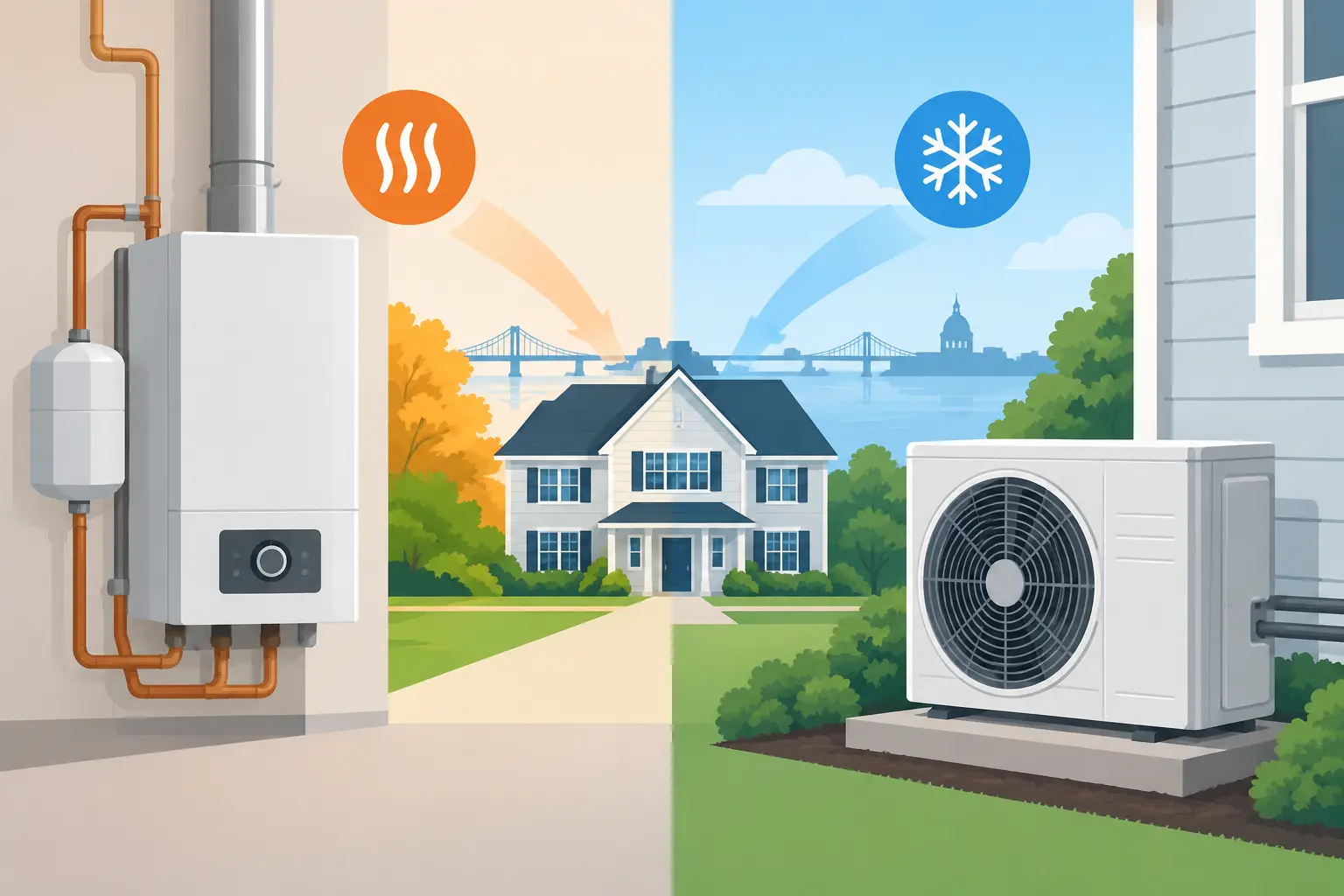
A boiler heats water, then sends that hot water through radiators, baseboard units, or in-floor tubing. Depending on the system, it may run on natural gas, propane, oil, or electricity. The heat is delivered through a hydronic system, not through forced-air ducts.
A heat pump moves heat rather than creating it through combustion. In heating mode, it pulls available heat from outdoor air and transfers it indoors. In cooling mode, it reverses direction and works like an air conditioner, moving indoor heat outside. Heat pumps may connect to ductwork, operate as ductless mini splits, or serve a combination of both.
That difference affects comfort as much as efficiency. Boilers provide steady, quiet radiant heat. Heat pumps provide both heating and cooling from one system, with properly designed equipment offering efficient operation through much of a Maryland winter.
When a Boiler Is the Better Fit
A new boiler can be a smart investment when a home or building already has a well-maintained hydronic distribution system. Reusing sound radiators, piping, and zoning equipment can reduce the scope of a replacement compared with adding ductwork or multiple indoor heat pump units.
Many homeowners also prefer the feel of radiator or radiant-floor heat. It is gentle, even, and does not create the airflow associated with a forced-air system. Boiler systems are generally quiet, and rooms can often be zoned independently for better temperature control.
Boilers also perform consistently during severe cold without relying on a supplemental heat source. For larger older homes with existing radiators, or commercial spaces built around hydronic heating, that reliability can be especially valuable.
There are trade-offs. A boiler does not provide air conditioning. If the property needs cooling, it will need a separate central air conditioner, ductless cooling system, or another solution. Fuel costs can also vary significantly based on whether the boiler uses gas, oil, propane, or electricity. An older, inefficient boiler may cost far more to operate than a modern replacement.
A boiler replacement should include an evaluation of the piping, circulator pumps, expansion tank, valves, controls, and venting. Installing an efficient boiler on a failing distribution system will not deliver the performance or reliability a property owner expects.
When a Heat Pump Makes More Sense
Heat pumps are often the practical choice for homes that need both heating and cooling. Rather than maintaining a boiler for winter and a separate air conditioner for summer, a heat pump can handle both jobs. This can simplify equipment planning and free up space, particularly when replacing aging HVAC systems.
Modern cold-climate heat pumps are far more capable in low outdoor temperatures than earlier models. In the Edgewater and Annapolis area, a properly selected system can provide efficient heating for much of the season. Some systems use electric resistance heat, a furnace, or an existing boiler as backup when temperatures drop or demand is unusually high.
For homes with usable ductwork, a ducted heat pump may be a straightforward replacement for an older air conditioner and furnace. For additions, older homes without ducts, sunrooms, garages, or spaces with persistent comfort problems, ductless mini splits can provide targeted heating and cooling without a major renovation.
Heat pumps are not automatically the lowest-cost choice in every situation. Electricity rates, the cost of natural gas or propane, the efficiency of the equipment, and the home’s heat loss all affect monthly expenses. A poorly sized heat pump can short-cycle, struggle on the coldest days, or leave parts of a building uncomfortable. Proper load calculations matter more than choosing equipment based on square footage alone.
Installation Costs Depend on What the Building Already Has
Comparing only the price of a boiler and the price of a heat pump rarely gives a clear picture. The installation scope is often the larger factor.
Replacing a boiler in an existing hydronic system may be relatively direct if the piping and controls are in good condition. Costs rise when old venting, corroded piping, failing zone valves, or chimney work must be addressed. Converting from oil to gas or propane can also require fuel-line work, tank removal, and permit coordination.
Installing a heat pump can be simple when existing ducts are properly sized, sealed, and balanced. It can be more involved when ducts need repair, the electrical panel needs an upgrade, or the building has no ductwork at all. Ductless systems avoid duct installation but require careful placement of indoor units, outdoor equipment, refrigerant lines, condensate drains, and electrical connections.
For commercial properties, the evaluation can be even more detailed. Occupancy schedules, ventilation requirements, control systems, rooftop equipment, and tenant comfort needs all influence whether a boiler, heat pump, or hybrid approach is appropriate.
Comfort, Maintenance, and Service Life
Boilers and heat pumps both need regular professional maintenance. The maintenance tasks differ, but skipping service is a common reason systems lose efficiency and fail when they are needed most.
Boiler maintenance typically includes inspecting combustion components, venting, safety controls, pumps, pressure levels, and water quality. Gas- and oil-fired equipment should be serviced by qualified technicians who can identify combustion or venting concerns before they become a safety issue.
Heat pump maintenance includes cleaning indoor and outdoor coils, checking refrigerant performance, inspecting electrical components, clearing condensate drainage, and confirming airflow. Dirty filters, blocked outdoor coils, and duct leaks can reduce comfort and increase energy use.
In terms of comfort, boilers tend to deliver more constant radiant warmth, while heat pumps often run longer at a lower output to maintain a stable indoor temperature. That longer runtime is normal for many variable-speed heat pumps. It is not necessarily a sign that the system is working too hard.
A Hybrid System Can Offer the Best Balance
Some Maryland homes do not need an all-or-nothing decision. A dual-fuel or hybrid setup can pair a heat pump with a gas furnace or boiler. The heat pump handles milder weather efficiently, while the backup heat source takes over during colder conditions or when utility costs favor it.
This approach can work well for homeowners who already have a reliable boiler and want to add efficient air conditioning and supplemental heating. It can also reduce the pressure to replace every component at once. The controls must be set up correctly, however, so the systems switch at the right temperature and operate economically.
How to Choose the Right System
Start with the building, not a product brochure. A professional assessment should consider insulation levels, windows, air leakage, duct condition, radiator capacity, electrical service, fuel availability, and the condition of existing equipment. The goal is to identify the system that can meet the building’s actual heating and cooling load.
A boiler may be the better choice when you value existing radiant heat, have a sound hydronic system, and already have a separate cooling plan. A heat pump may be the better choice when you want efficient heating and air conditioning from one system, especially if ductwork is available or ductless zones fit the layout. A hybrid system deserves consideration when winter performance, fuel costs, and existing equipment point in different directions.
Permit requirements, manufacturer warranty terms, and local installation standards should also be part of the plan. Licensed, insured technicians can help ensure the equipment is sized correctly, installed safely, and ready for dependable service.
Before committing to either option, ask for a clear evaluation of your existing system and a written scope of work. Bethany Air can help property owners weigh comfort, operating costs, and long-term reliability so the next heating decision feels practical, not pressured.
