

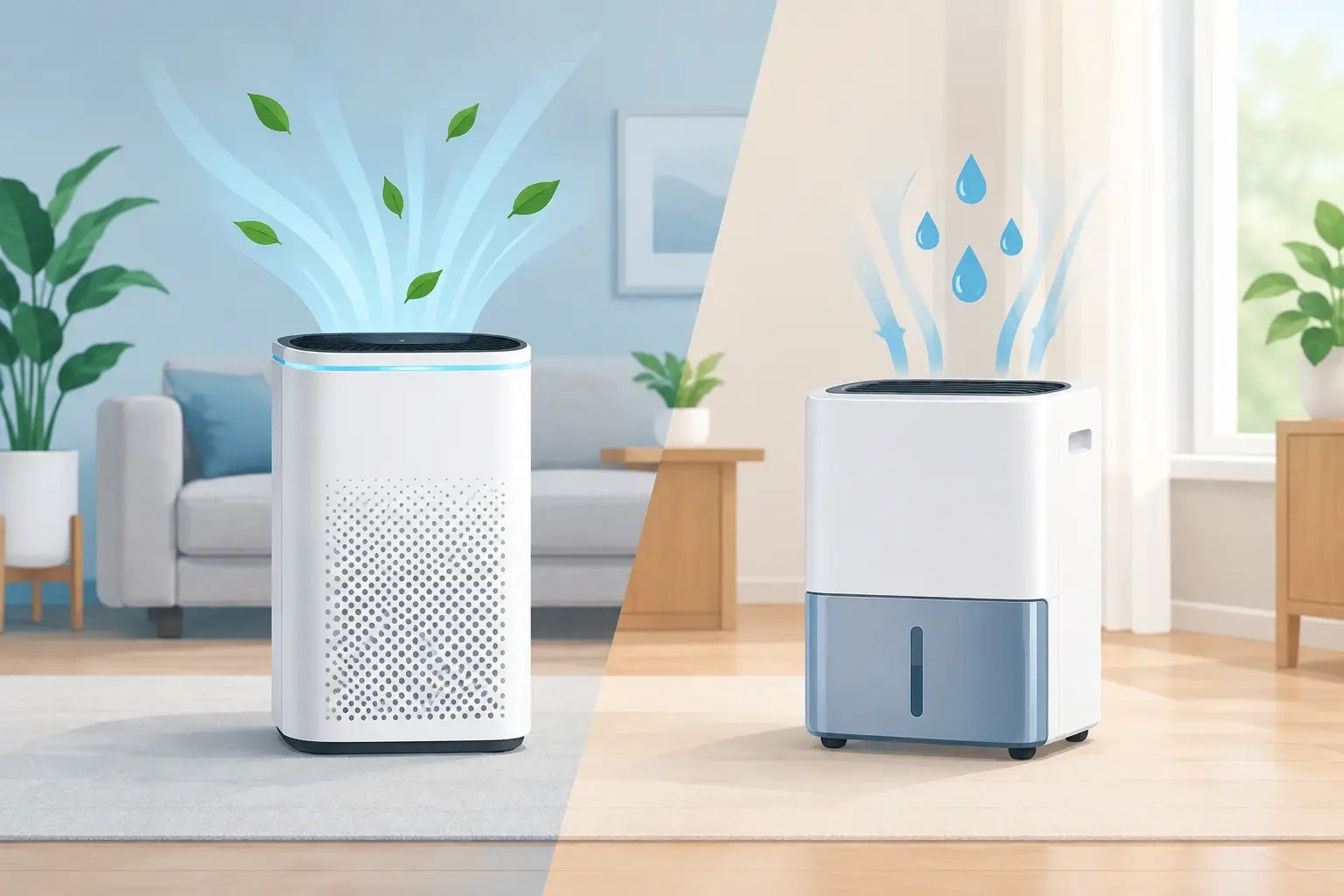
Air Purifier vs Dehumidifier for Your Home
A musty basement after a Maryland summer storm calls for a different solution than a bedroom that feels dusty every morning. The air purifier vs dehumidifier question is not about choosing the better appliance. It is about identifying what is affecting your indoor air and using the right equipment to correct it.
An air purifier cleans airborne particles and some odors. A dehumidifier removes moisture from the air. Both can improve comfort, but neither replaces proper heating, cooling, ventilation, or repairs when an HVAC system has a larger problem. Knowing the difference can help homeowners and facility managers make a practical investment instead of treating the wrong symptom.
Air Purifier vs Dehumidifier: The Core Difference
An air purifier pulls room air through one or more filters, then returns cleaner air to the space. Depending on its filter type, it can capture dust, pollen, pet dander, smoke particles, and other airborne contaminants. Models with activated carbon can also reduce certain odors and gases. A purifier does not remove moisture from the air.
A dehumidifier draws in humid air, condenses water vapor into a collection tank or drain line, and sends drier air back into the room. Its purpose is moisture control. It will not reliably remove dust, pollen, or pet dander from the air, although lower humidity can make a room feel less stale and can discourage conditions that support mold and dust mites.
The distinction matters because high humidity and poor air quality often show up together. A damp room may smell musty, collect dust, and feel uncomfortable, but the moisture problem still needs to be addressed first.
What an Air Purifier Can Help With
An air purifier is often the right choice when the concern is what you are breathing in, rather than how damp the room feels. It can be especially useful in bedrooms, nurseries, living areas, offices, and other occupied spaces where people spend long periods of time.
A quality unit with a true HEPA filter can capture many fine airborne particles, including pollen, pet dander, and dust. That can be helpful for households dealing with seasonal allergies, shedding pets, nearby construction dust, or smoke drifting indoors from outside. For odor concerns, look for a unit that includes an activated carbon filter. HEPA filtration alone is designed for particles, not gases or odors.
Size matters. A small tabletop purifier will not do much for a large open living area, and a unit rated for 200 square feet should not be expected to clean a 600-square-foot space. Check the manufacturer’s coverage rating and consider ceiling height, room layout, doors, and whether the purifier will run continuously.
Purifiers also require routine attention. Filters need replacement on schedule, and a neglected unit can lose effectiveness. If you have an HVAC system with a high-quality media filter, that system can provide broader filtration throughout the home when it is properly designed and maintained.
When a Dehumidifier Is the Better Answer
A dehumidifier is a stronger fit when indoor humidity is regularly above the recommended range. For most homes, indoor relative humidity should generally stay between 30% and 50%. In Maryland’s humid climate, basements, crawl spaces, laundry rooms, and lower levels often need extra moisture control during warmer months.
Signs of excess humidity include condensation on windows, a persistent musty odor, peeling paint, damp-feeling walls, warped wood, and mold or mildew growth. You may also notice that towels take too long to dry or that the air feels sticky even when the thermostat setting seems reasonable.
Removing moisture makes a space more comfortable and can help limit the conditions that allow mold and dust mites to thrive. It may also reduce the workload on your air conditioner. Your AC removes some moisture while it cools, but it may not keep up if the system is oversized, poorly maintained, short-cycling, or dealing with an unusually damp basement or crawl space.
A portable dehumidifier is useful for a single problem area, provided it is correctly sized and drained. Emptying a bucket every day is easy to overlook, so a unit with a hose connection or condensate pump may be more practical for frequent use. For whole-home moisture concerns, a professionally installed whole-house dehumidifier can provide more consistent control without placing separate appliances in multiple rooms.
Can You Use an Air Purifier and Dehumidifier Together?
Yes. In some homes and commercial spaces, using both makes good sense. A finished basement may need a dehumidifier to control dampness and an air purifier to reduce airborne dust, pet dander, or particles from foot traffic. A bedroom used by an allergy sufferer may benefit from filtration while the home’s HVAC system or a dedicated dehumidifier keeps humidity in check.
The key is not to assume the two appliances solve the same problem. A purifier cannot stop condensation on pipes or prevent moisture damage. A dehumidifier cannot replace filtration during heavy pollen season or after a dusty renovation project.
If mold is visible, water is entering the building, or a room stays damp despite running a dehumidifier, the source needs attention. Leaks, poor drainage, inadequate ventilation, damaged ductwork, and HVAC performance issues can all contribute to recurring moisture problems. Covering the symptom with an appliance may delay a repair that protects the building and the people inside it.
How to Choose the Right Option
Start by measuring humidity with an inexpensive hygrometer. If the reading is consistently above 50%, especially in a basement or lower level, moisture control should be part of the plan. If humidity is in a healthy range but the air feels dusty, allergens are a concern, or odors linger, an air purifier may provide more noticeable results.
Consider the specific room, too. A portable purifier is usually best for the room where people sleep or spend the most time. A portable dehumidifier is often appropriate for a contained area with a moisture issue. For a large home, multiple problem areas, or a commercial property, equipment integrated with the HVAC system may be more effective and easier to manage.
Avoid selecting solely by price or square-footage claims on the box. An undersized dehumidifier may run constantly without reaching its humidity target. An undersized purifier may move air but provide little meaningful filtration for the room. Noise level, energy use, drainage options, replacement filter costs, and maintenance requirements should all factor into the decision.
When the HVAC System Needs Attention
Portable appliances are useful tools, but they are not always the full answer. If your home feels humid throughout the cooling season, has uneven temperatures, or develops musty odors whenever the AC runs, an HVAC evaluation is a smart next step. Problems such as dirty coils, clogged condensate drains, poor airflow, duct leaks, and incorrect equipment sizing can affect both comfort and indoor air quality.
For businesses and property managers, consistent humidity matters beyond comfort. Excess moisture can affect finishes, inventory, electronics, and occupant satisfaction. A preventative maintenance plan helps identify drainage, ventilation, filtration, and cooling issues before they lead to costly downtime or indoor air concerns.
Bethany Air’s expert HVAC technicians can assess whether a portable solution is enough or whether your heating and cooling system needs service, improved filtration, ventilation updates, or dedicated humidity control. Clear recommendations and dependable service make it easier to protect your space for the long term.
If a room still feels damp, smells musty, or triggers allergy symptoms after you have tried a basic appliance, do not keep guessing. Finding the source of the problem is the most reliable way to make indoor air feel cleaner, drier, and more comfortable.
