

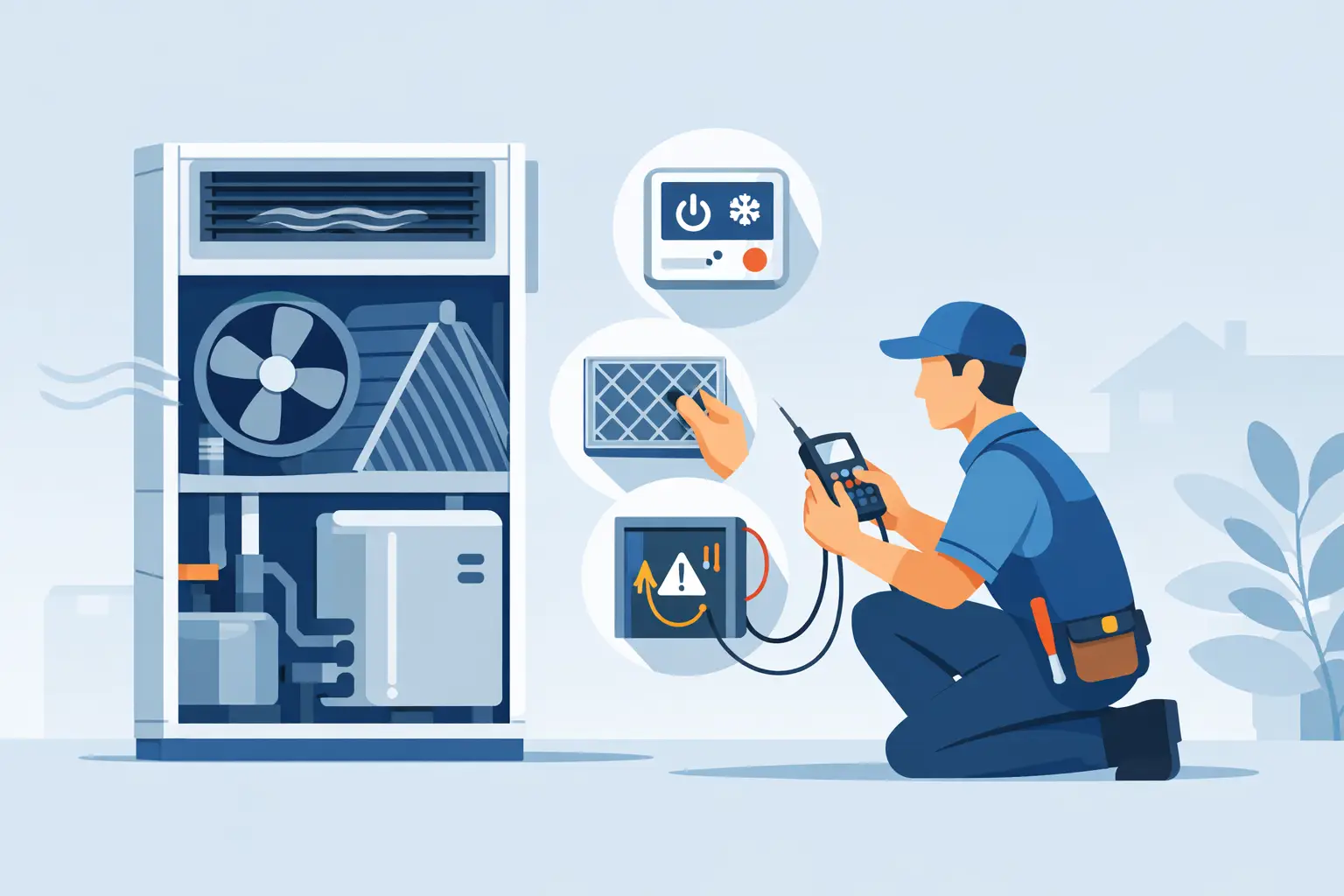
Air Handler Not Blowing? What to Check First
A quiet air handler can bring your whole home or building to a stop. If your air handler not blowing has left rooms warm, humid, or without heat, the issue may be as simple as a thermostat setting or as serious as an electrical or motor failure. A few safe checks can help you understand what is happening. Beyond that, prompt professional service protects your comfort and can prevent a smaller repair from becoming a larger system problem.
Start With the Simple, Safe Checks
Before opening equipment panels or assuming the system has failed, check whether the thermostat is calling for heating or cooling. Set it to the desired mode, lower the temperature setting for cooling or raise it for heating, and make sure the fan setting is on Auto. If the fan is set to On, it should run continuously. If it does not, that points toward a power, control, or blower issue.
Next, confirm that the air handler and outdoor unit have power. Check your electrical panel for a tripped breaker. If one has tripped, reset it once. A breaker that trips again should not be repeatedly reset. That is a sign of an electrical fault, a failing component, or an overloaded circuit that needs attention from a licensed HVAC technician.
If the thermostat display is blank, replace the batteries if your model uses them. Some thermostats receive power from the HVAC system, so a blank screen can also indicate a blown low-voltage fuse, a tripped breaker, or a problem with the system transformer.
Why an Air Handler Stops Blowing
An air handler moves conditioned air through your ductwork. Its blower assembly, controls, drain system, filter, and electrical components all have to work together. When airflow stops, the cause can vary considerably depending on the age of the system, recent weather, maintenance history, and whether the unit is serving a home or commercial property.
A clogged air filter is restricting airflow
A heavily loaded filter can make it difficult for the blower to pull air through the system. In severe cases, the evaporator coil may freeze during cooling season, reducing airflow to a trickle or stopping it altogether. A dirty filter is not always the full reason an air handler fails to run, but it is one of the most common maintenance issues technicians find.
Check the filter’s condition and replace it if it is visibly gray, packed with dust, or overdue for service. Use the filter type and size recommended for your system. Installing a filter that is too restrictive can create airflow problems of its own, especially in older duct systems.
The blower motor or capacitor has failed
The blower motor is responsible for pushing air through the ducts. Depending on the equipment, it may use a capacitor to help it start and run. A failed capacitor, worn motor bearings, an overheating motor, or a damaged control module can all stop the fan.
You may hear humming, clicking, or a brief attempt to start without any airflow. You may also notice a burning smell or unusual noise before the system stops. Turn the system off if you smell electrical burning or see smoke, then call for service right away. Continuing to run the equipment can cause more damage.
A condensate drain safety switch has shut the system down
During Maryland’s humid cooling season, an air handler removes moisture from the air. That water drains through a condensate line. If the line clogs or the drain pan fills, a float switch may shut the system down to prevent water damage.
This is a valuable safety feature, but it can be frustrating when the air handler will not run. Water around the indoor unit, a full drain pan, or a recent period of high humidity can point to a condensate issue. Avoid bypassing a safety switch. The drain needs to be cleared and the reason for the blockage addressed.
A frozen evaporator coil is blocking air movement
When an indoor coil freezes, air cannot pass through it properly. Restricted airflow from a dirty filter, blocked return vents, dirty coils, blower problems, or low refrigerant can contribute to icing. You may see frost on refrigerant lines or notice that the system runs but little or no air comes from the vents.
Turn cooling off and set the fan to Auto while you wait for service. Do not chip ice from the coil or force the system to keep operating. A technician should identify why it froze rather than simply thawing it and restarting the unit.
Electrical controls or wiring need repair
Air handlers rely on relays, circuit boards, safety switches, wiring connections, and low-voltage controls. A failed control board or loose electrical connection can prevent the blower from receiving the signal to operate. These failures are not reliable DIY repairs because they require electrical testing and equipment-specific diagnosis.
In a commercial setting, the issue may also involve a building automation control, a rooftop unit connection, a disconnect, or a larger electrical supply problem. Fast diagnosis matters when poor airflow affects employees, tenants, customers, inventory, or sensitive equipment.
Check Your Vents and Ductwork Too
If you can hear the air handler running but airflow at the vents is weak, the issue may not be the air handler itself. Make sure supply registers and return grilles are open and not blocked by furniture, rugs, shelving, or stored items. A closed or obstructed return can put unnecessary strain on the system.
Ductwork problems can also reduce airflow. Disconnected ducts, crushed flexible duct runs, damaged dampers, leaks in attic or crawlspace ductwork, and undersized returns can all affect comfort. One room with weak airflow may point to a branch duct issue. Weak airflow throughout the building is more likely to involve the blower, filter, coil, or main duct system.
When to Turn the System Off
Some air handler problems require immediate action. Turn the system off at the thermostat and, if necessary, the breaker if you notice a burning odor, smoke, sparking, water leaking near electrical components, loud metal-on-metal sounds, or repeated breaker trips. Do not remove access panels while the equipment is powered.
For a heat pump system in winter, do not ignore an air handler that is not blowing warm air. Auxiliary heat and air movement are essential during cold weather, and delays can leave pipes and occupied spaces vulnerable to low temperatures. For businesses and multi-unit properties, an HVAC interruption should be addressed before it affects operations or tenant safety.
What a Professional Air Handler Repair Visit Includes
A thorough service visit should go beyond getting the fan running again. An experienced technician checks thermostat operation, voltage, breakers, low-voltage controls, blower motor performance, capacitors, wiring, filters, coil condition, condensate drainage, and airflow. If the system has frozen or has a suspected refrigerant issue, the technician should determine the root cause before recommending a repair.
The right solution depends on what failed and the condition of the equipment. Replacing a capacitor or clearing a drain line is often a straightforward repair. A failing variable-speed blower motor or damaged control board can be a more significant expense. On an older system with recurring repairs, poor efficiency, or difficult-to-source parts, replacement may be worth discussing. A clear recommendation should explain the options, expected cost, and practical trade-offs without pressure.
Bethany Air provides dependable air handler repair, maintenance, and emergency HVAC service for homeowners and businesses in Edgewater, Annapolis, and surrounding Maryland communities. Our licensed and insured technicians diagnose the problem carefully, explain what they find, and provide transparent pricing before work begins.
Prevent Another No-Airflow Call
Routine maintenance is the best defense against a sudden airflow failure. Change filters on schedule, keep outdoor equipment clear of leaves and debris, make sure indoor returns stay unobstructed, and schedule professional maintenance before peak heating and cooling seasons. During a maintenance visit, technicians can spot developing motor, electrical, drainage, and airflow issues before they interrupt service.
If your air handler has stopped blowing, do the safe checks, protect the equipment from further damage, and arrange service promptly. Restoring airflow is only part of the job. Finding the reason it stopped gives you a better chance of staying comfortable when your system is needed most.
