
When to Replace HVAC Filters for Better Airflow
A filter that looks like a small, inexpensive part can have an outsized effect on your comfort. When homeowners and facility managers forget to replace HVAC filters, the system must work harder to move air through the building. That can mean uneven temperatures, higher utility bills, more dust, and unnecessary strain on expensive heating and cooling equipment.
For homes and businesses in Edgewater, Annapolis, and surrounding Maryland communities, regular filter changes are one of the simplest ways to support cleaner air and dependable HVAC performance. The right schedule is not the same for every property, though. Filter type, household activity, equipment design, and indoor air quality needs all matter.
How Often to Replace HVAC Filters
A common starting point is every 30 to 90 days, but that range needs context. Thin, 1-inch filters generally need attention more often than deeper 4-inch or 5-inch media filters. A monthly visual check is a smart habit even if the filter is expected to last longer.
If your home has one or two occupants, no pets, and no significant allergy concerns, a standard filter may last close to 90 days. A busy household with children, pets, frequent cooking, or open windows may need a fresh filter every 30 to 60 days. Pet hair and dander can load a filter quickly, especially during shedding seasons.
Commercial properties should set their schedule around building use rather than a calendar reminder alone. Offices, retail spaces, restaurants, medical facilities, and multi-tenant buildings can have very different air quality demands. High occupancy, construction dust, outdoor pollutants, and extended operating hours often call for more frequent inspections. Facilities with several units should document filter sizes, change dates, and observations so a developing airflow issue does not get missed.
A few situations justify checking filters more often:
- You have pets, smokers, allergies, or respiratory sensitivities in the building.
- Renovation work, drywall sanding, or landscaping activity has created extra dust.
- The HVAC system runs heavily during a Maryland heat wave or winter cold snap.
- You notice visible dust around supply vents or reduced airflow from registers.
- Your system has a history of frozen air conditioner coils, overheating, or airflow-related service issues.
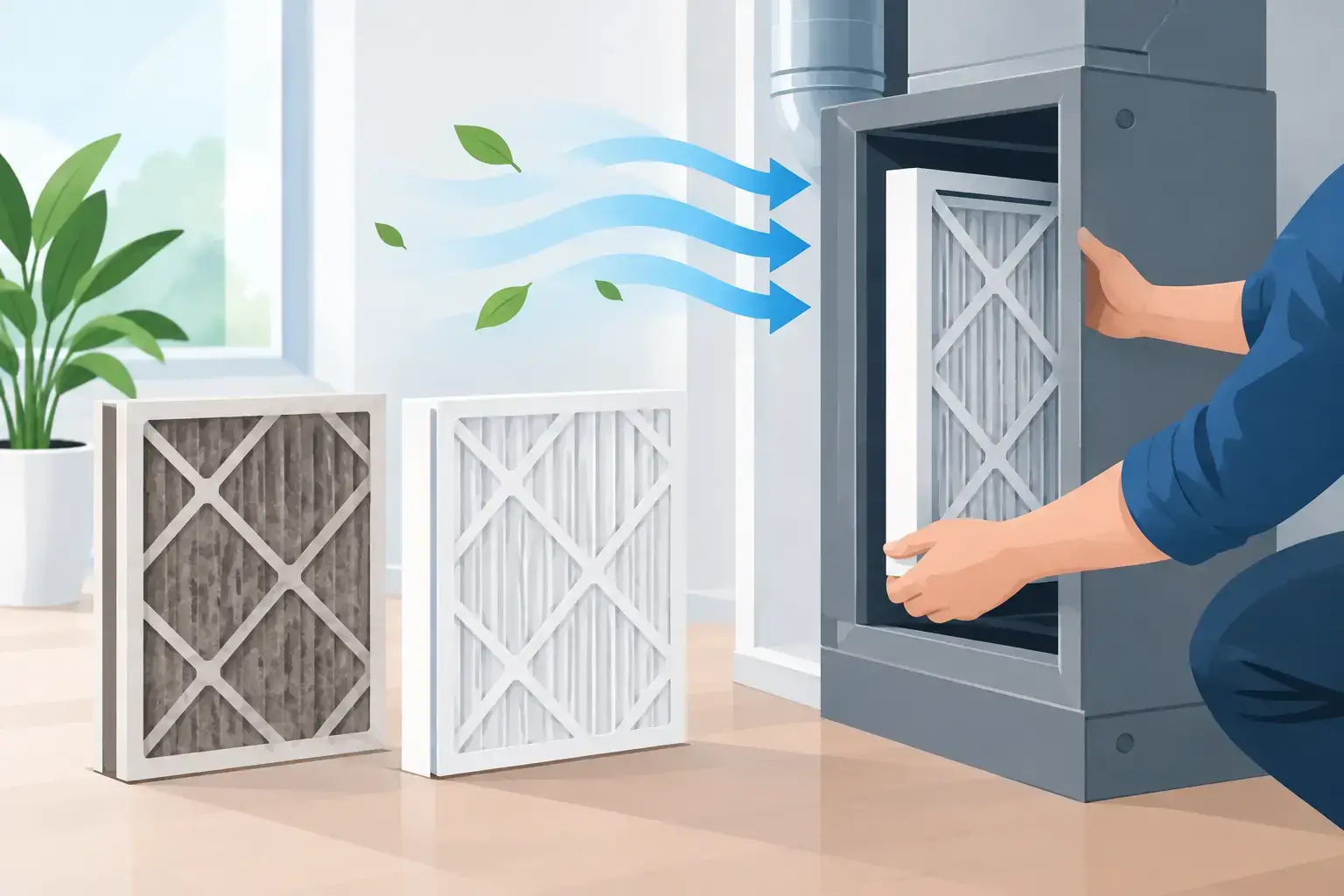
A filter does not always look completely black when it has become restrictive. Compare it with a new filter of the same type. If the material is visibly coated with dust, pet hair, or debris, replace it.
Why a Clean Filter Protects Your HVAC System
Your HVAC filter is designed primarily to protect the equipment by capturing airborne particles before they reach the blower, evaporator coil, heat exchanger area, and ductwork. It also supports better indoor air quality by reducing the circulation of dust and other particles throughout the building.
As debris collects, airflow drops. The blower has to work harder to pull air through the restriction, which can increase energy use and wear on moving parts. In cooling mode, poor airflow can contribute to a frozen evaporator coil. In heating mode, restricted airflow may cause the furnace to run hotter than intended and trigger safety controls.
A dirty filter is not the cause of every HVAC problem. A system that short cycles, makes unusual noises, leaks water, or fails to maintain temperature may have a thermostat, refrigerant, electrical, drainage, or mechanical issue. Replacing the filter is a sensible first check, but it should not delay professional service when performance remains poor.
Choosing the Right Filter and MERV Rating
Not every filter is interchangeable. Before purchasing replacements, check the size printed on the frame and confirm whether it is the actual size or a nominal size. A filter labeled 16 x 25 x 1, for example, may measure slightly smaller than those dimensions. The replacement must fit securely without bending, gaps, or forcing the access door closed.
MERV ratings indicate how effectively a filter captures particles of different sizes. Higher is not automatically better for every system. A more restrictive filter can improve particle capture but may reduce airflow if the equipment was not designed for it.
For many homes, a MERV 8 to MERV 11 filter provides a practical balance of filtration and airflow. Homes with allergy concerns may benefit from a higher rating, provided the HVAC system can accommodate it. Some specialized filters are designed for finer particle control, but they should be selected with professional guidance, particularly on older systems or systems that already struggle with airflow.
Commercial equipment may have specific filter requirements based on the unit, occupancy, and building purpose. Do not assume that using the highest available MERV rating is the safest choice. A technician can verify static pressure, blower performance, and manufacturer recommendations before a facility changes filtration standards.
How to Replace an HVAC Filter Correctly
Changing a filter takes only a few minutes, but installation details matter. Turn the thermostat off or set the system to stop running before opening the filter compartment. This prevents the blower from pulling loose debris into the system while the filter is removed.
Locate the filter slot. It may be behind a return-air grille, inside an air handler or furnace cabinet, or near the blower compartment. Remove the old filter carefully, keeping it upright if it is heavily loaded with dust. Check the direction arrow printed on the new filter frame. The arrow should point in the direction of airflow, toward the furnace or air handler and away from the return grille.
Slide the filter into place without crushing the frame. It should sit flat and secure, with no open space around the edges. Close the access panel or grille, then restore the thermostat to its normal setting. Mark the installation date on the filter frame or add a reminder to your phone or maintenance log.
If the filter will not fit, the slot is damaged, or you cannot identify the airflow direction, do not force it. An improperly installed filter can bypass air around the edges or collapse into the cabinet.
Signs Your Filter Change Schedule Needs Adjustment
The best filter schedule is one that reflects what your system and building are actually experiencing. If a filter looks heavily loaded after only a few weeks, a shorter interval is appropriate. It may also be worth checking for unusually dusty return vents, duct leakage, excessive indoor dust sources, or construction activity nearby.
On the other hand, replacing a clean, high-capacity filter too early can add unnecessary cost. The goal is not to change filters as often as possible. It is to maintain adequate airflow and filtration without creating a burden on the HVAC system.
Pay attention to comfort changes between maintenance visits. Rooms that feel stuffy, weak airflow at multiple vents, rising energy costs, and dust that returns quickly after cleaning are all reasons to inspect the filter. If a clean filter does not improve the issue, the system may need a professional evaluation.
Make Filter Changes Part of Preventive Maintenance
Filter changes are valuable, but they are only one part of reliable HVAC care. Seasonal maintenance gives a trained technician an opportunity to inspect electrical connections, coils, drains, blower components, refrigerant performance, combustion safety, and overall system operation. For commercial properties, preventive maintenance can also reduce unexpected downtime and help protect tenant comfort.
Keep the correct filter sizes on hand so a replacement is available when needed. For buildings with multiple systems, label each filter location and maintain a simple service record. This small amount of organization can prevent missed changes and make it easier to spot patterns, such as one unit using filters much faster than the others.
If your system still has weak airflow, unusual cycling, or comfort problems after a filter replacement, dependable local service can identify the cause before a small issue becomes a major repair. Bethany Air provides straightforward HVAC maintenance and repair support for homeowners and businesses that want their equipment to stay ready for the next season.
