
7 Best HVAC Upgrades for Comfort at Home
A house can have a working furnace and air conditioner yet still feel uncomfortable room to room. Upstairs bedrooms may run hot, a family room may feel damp, or one office may never hold a steady temperature. The best HVAC upgrades for comfort address those everyday frustrations at their source instead of asking your system to work harder without a clear plan.
For homeowners in Edgewater, Annapolis, and surrounding Maryland communities, the right improvement depends on the home’s layout, existing equipment, ductwork, insulation, and indoor air concerns. A professional evaluation helps separate a worthwhile upgrade from an unnecessary expense and gives you a clear path to more dependable comfort.
Start With the Cause of the Comfort Problem
Before replacing equipment or adding accessories, identify what is causing the problem. A system that cycles frequently, makes unusual noises, or cannot reach the thermostat setting may need repair or replacement. But uneven temperatures can also result from leaky ducts, poor airflow, an incorrectly sized system, or a thermostat located in the wrong area of the home.
Humidity deserves equal attention. Maryland summers bring moisture as well as heat, and an oversized air conditioner can cool a home too quickly without running long enough to remove enough humidity. The result is a home that reads 72 degrees but still feels clammy. In winter, dry air, cold spots, and stale rooms can make a heating system seem less effective than it is.
A qualified HVAC technician can inspect equipment performance, airflow, duct condition, and controls before recommending an upgrade. This approach protects your budget and helps ensure each improvement works with the rest of the system.
Best HVAC Upgrades for Comfort and Control
1. A programmable or smart thermostat
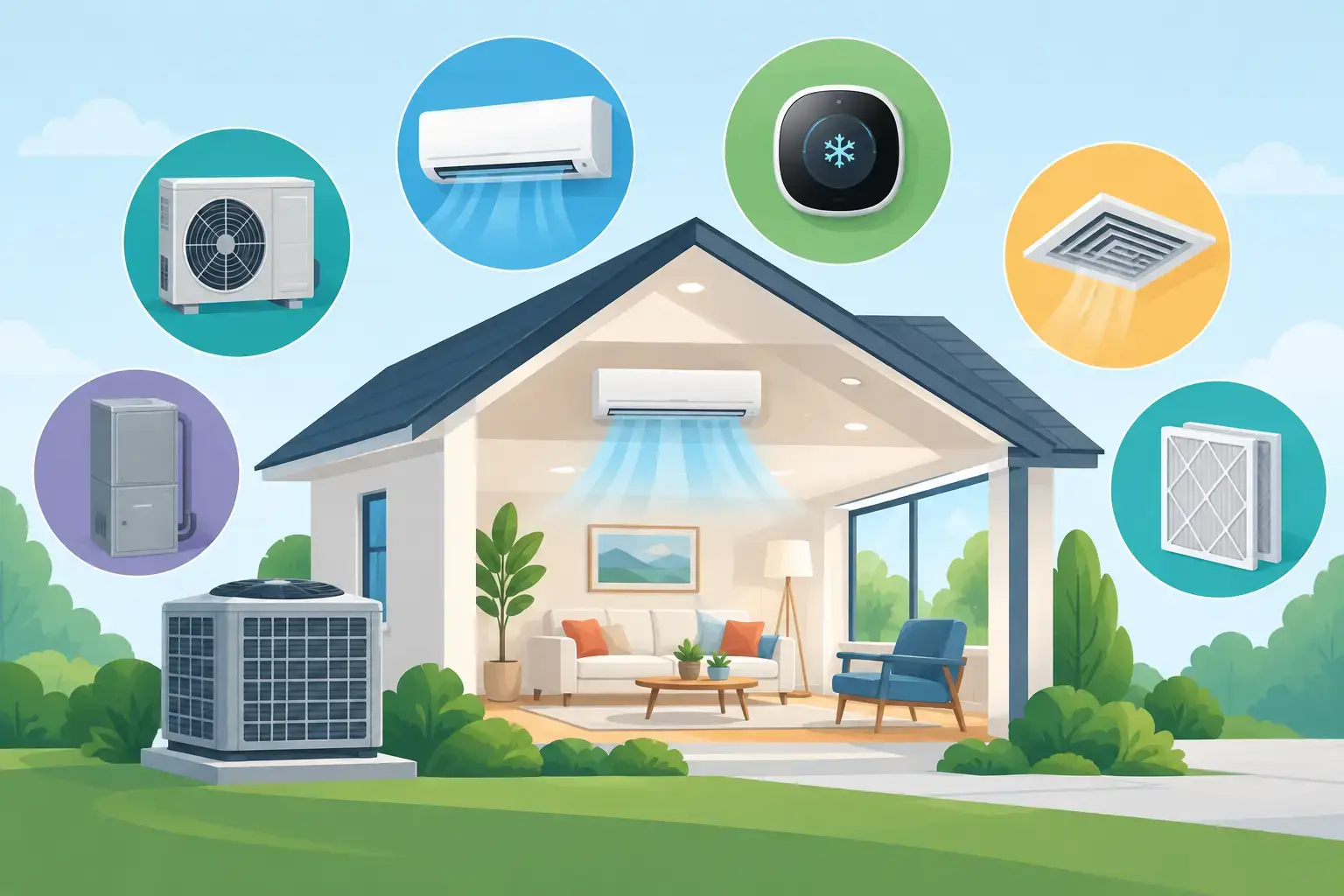
A modern thermostat is often one of the most practical starting points. Programmable models allow you to set temperatures around your normal schedule, while smart thermostats can provide remote access, scheduling options, and useful energy-use information. For busy households, that means less time adjusting the thermostat and fewer occasions when the system runs unnecessarily.
The comfort benefit is consistency. Rather than coming home to a warm, humid house or waking up to an overly cold one, you can maintain settings that match how you use each day. Smart controls are particularly useful for second homes, rental properties, and small commercial spaces where occupancy changes throughout the week.
Not every thermostat works with every system, especially multi-stage equipment, heat pumps, zoning controls, or older wiring. Proper compatibility and installation matter, so the thermostat communicates correctly with the HVAC equipment.
2. Zoned heating and cooling
Zoning divides a home or building into separate temperature areas, each controlled by its own thermostat. Motorized dampers in the ductwork direct conditioned air where it is needed, allowing one area to be warmer or cooler than another.
This upgrade can make a meaningful difference in two-story homes, homes with large windows, finished basements, additions, and properties with rooms that are rarely used. It can also help commercial property managers control comfort in offices, conference rooms, or tenant areas with different occupancy patterns.
Zoning is not the answer for every building. The duct system and equipment must be designed to handle the airflow changes safely. A professional assessment is essential, especially if the existing ducts are undersized or the system already struggles with airflow.
3. Variable-speed equipment
Traditional HVAC systems commonly run at one speed: on or off. Variable-speed air handlers, furnaces, heat pumps, and air conditioners can adjust output more gradually to better match current demand. Instead of repeatedly blasting conditioned air and shutting down, the system can run at lower capacity for longer periods.
Longer, steadier operation usually means more even temperatures, quieter performance, and better humidity control during cooling season. Variable-speed systems are often a strong option for homeowners replacing aging equipment and looking for more than basic heating and cooling.
The trade-off is a higher upfront cost than standard single-stage equipment. However, better comfort, lower operating noise, and improved efficiency can make the investment worthwhile when the existing system is near the end of its service life. Correct sizing is still critical. Even premium equipment cannot solve comfort problems if it is too large, too small, or connected to poor ductwork.
4. Duct sealing, repair, and insulation
Conditioned air can be lost before it ever reaches the rooms you are trying to heat or cool. Leaks, disconnected runs, crushed flex duct, and uninsulated ducts in attics or crawl spaces can create hot and cold spots while increasing system runtime.
Duct improvements are among the most overlooked HVAC comfort upgrades because the problem is largely hidden. Yet repairing and sealing ducts can improve airflow to distant rooms, reduce dust pulled in through gaps, and help equipment perform closer to its intended capacity. Insulating ducts located in unconditioned spaces also helps limit temperature loss.
Duct work should be evaluated as part of a complete comfort plan. Simply closing vents to force air elsewhere is rarely a reliable solution and can restrict airflow enough to cause equipment problems. The better approach is to measure airflow and correct the distribution issue properly.
5. Whole-home dehumidification and air quality equipment
Temperature is only part of indoor comfort. Excess moisture can make summer air feel heavy, encourage musty odors, and put added strain on an air conditioner. A whole-home dehumidifier works alongside the HVAC system to maintain healthier humidity levels without requiring the thermostat to be set unusually low.
For homes with allergies, pets, dust concerns, or persistent odors, indoor air quality options may also include upgraded filtration, air purification equipment, and ventilation solutions. The right choice depends on the concern. A higher-efficiency filter can help capture smaller particles, but it must be selected carefully so it does not restrict system airflow.
There is no single device that solves every air quality issue. Moisture control, filtration, ventilation, and routine maintenance all have different jobs. An HVAC professional can recommend equipment based on your home’s conditions rather than selling a one-size-fits-all add-on.
6. Ductless mini-splits for difficult spaces
Ductless mini-splits are an effective option for areas that are hard to serve with existing ductwork. Common examples include additions, garages, sunrooms, finished attics, bonus rooms, and older homes without a practical path for new ducts. Each indoor unit has its own control, allowing precise comfort in that space.
Because ductless systems do not depend on long duct runs, they can deliver efficient heating and cooling directly where it is needed. They may also complement a central system when one problem room needs help but the rest of the home is comfortable.
Placement and sizing are important. An improperly located indoor unit can create uneven airflow, and a unit that is too large may short-cycle. A professional installation also ensures the electrical work, drainage, refrigerant lines, permits, and manufacturer requirements are handled correctly.
7. A properly sized system replacement
When an older system is unreliable, expensive to repair, or unable to maintain comfort despite proper maintenance, replacement may be the most sensible upgrade. Modern heat pumps, high-efficiency air conditioners, furnaces, boilers, and air handlers offer stronger efficiency and more advanced comfort features than equipment installed years ago.
The key is not selecting equipment based on square footage alone. A proper load calculation considers the home’s size, insulation, windows, orientation, duct design, occupancy, and other factors. That process helps prevent the common problem of installing an oversized system that cools or heats too quickly and leaves rooms uneven or humid.
Choose Improvements That Work Together
The best results usually come from treating the HVAC system as a connected whole. A new thermostat will not correct leaky ducts. A new air conditioner cannot compensate for a poorly sized return duct. Likewise, air purification equipment will have limited value if humidity and filtration are ignored.
For many homeowners, the most practical path is to address maintenance and duct issues first, then consider controls or air quality upgrades. If equipment replacement is already on the horizon, it is a good time to evaluate variable-speed options, zoning, and a complete duct assessment together. Combining compatible improvements during a planned installation can be more cost-effective than making separate changes later.
For commercial properties, comfort planning should also account for operating hours, occupancy, equipment age, and the need for fast service if a system fails. Preventative maintenance helps protect those investments by catching worn parts, airflow concerns, and control issues before they affect tenants, customers, or employees.
Bethany Air provides dependable evaluations, installation, repair, and maintenance for heating, cooling, ductwork, thermostats, and indoor air quality equipment. Our licensed and insured technicians can help you understand your options with affordable, transparent pricing and recommendations based on how your property actually performs.
A comfort upgrade should make daily life easier, not create another maintenance concern. Start with the room or condition that bothers you most, schedule a professional evaluation, and build a solution that keeps your home or business comfortable through every Maryland season.
