

A Guide to AC Capacitor Failure and Warning Signs
Your air conditioner may seem to fail without warning: it hums but will not start, blows warm air, or trips a breaker during a Maryland heat wave. Often, the issue is a small but essential electrical part. This guide to AC capacitor failure explains what that part does, how to recognize trouble early, and why a professional diagnosis is the safest path to a reliable repair.
What an AC Capacitor Does
Most central air conditioners, heat pumps, and many commercial cooling systems use capacitors to help electric motors start and keep running. A capacitor stores and releases electrical energy in short bursts. Think of it as the component that gives a motor the initial push it needs, then helps it operate at the correct level.
In a typical outdoor condensing unit, a dual-run capacitor supports both the compressor and the condenser fan motor. Some systems use separate capacitors instead. Indoor blower motors can also use capacitors, depending on the equipment design.
When a capacitor weakens or fails, the motor may struggle to start, run inefficiently, overheat, or stop altogether. The capacitor itself is usually less expensive than a compressor or fan motor, but ignoring the problem can place unnecessary strain on those larger components.
Guide to AC Capacitor Failure: Common Warning Signs
Capacitor problems do not always look the same. The symptoms depend on whether the affected capacitor serves the compressor, outdoor fan, or indoor blower. If you notice any of the following, turn the system off and arrange for service rather than repeatedly trying to restart it.
- A humming outdoor unit that will not start. You may hear a low hum after the thermostat calls for cooling, but the fan and compressor do not come on.
- Warm air from supply vents. The thermostat is set to cool, the indoor blower may be operating, but the outdoor unit is not moving heat out of the home or building.
- An outdoor fan that starts slowly or stops unexpectedly. The fan may spin intermittently, run at an unusual speed, or shut down while the system is calling for cooling.
- Frequent circuit breaker trips. Electrical components can draw excess current when a motor cannot start properly. A tripped breaker always deserves attention, especially if it happens more than once.
- A sudden rise in cooling costs or longer run times. A weakening capacitor can make motors work harder. That can reduce efficiency before the component fails completely.
A burning odor, smoke, loud buzzing, or a hot electrical panel is more urgent. Shut off the equipment if it is safe to do so and contact an HVAC professional promptly. If there is active smoke or fire, call emergency services.
Why AC Capacitors Fail
Capacitors are wear items. They are designed for years of use, not permanent service. Age is a common factor, but several conditions can shorten their life.
Maryland summers can be hard on outdoor equipment. High outdoor temperatures raise operating temperatures inside the condensing unit, while long cooling cycles put more demand on electrical components. Heat is one reason capacitor failures often appear on the hottest days, when your system has been working hardest.
Power fluctuations, lightning-related surges, poor electrical connections, and incorrect replacement parts can also damage a capacitor. So can a failing motor. If a condenser fan motor begins drawing too much power, replacing only the capacitor may provide a temporary improvement without resolving the underlying issue.
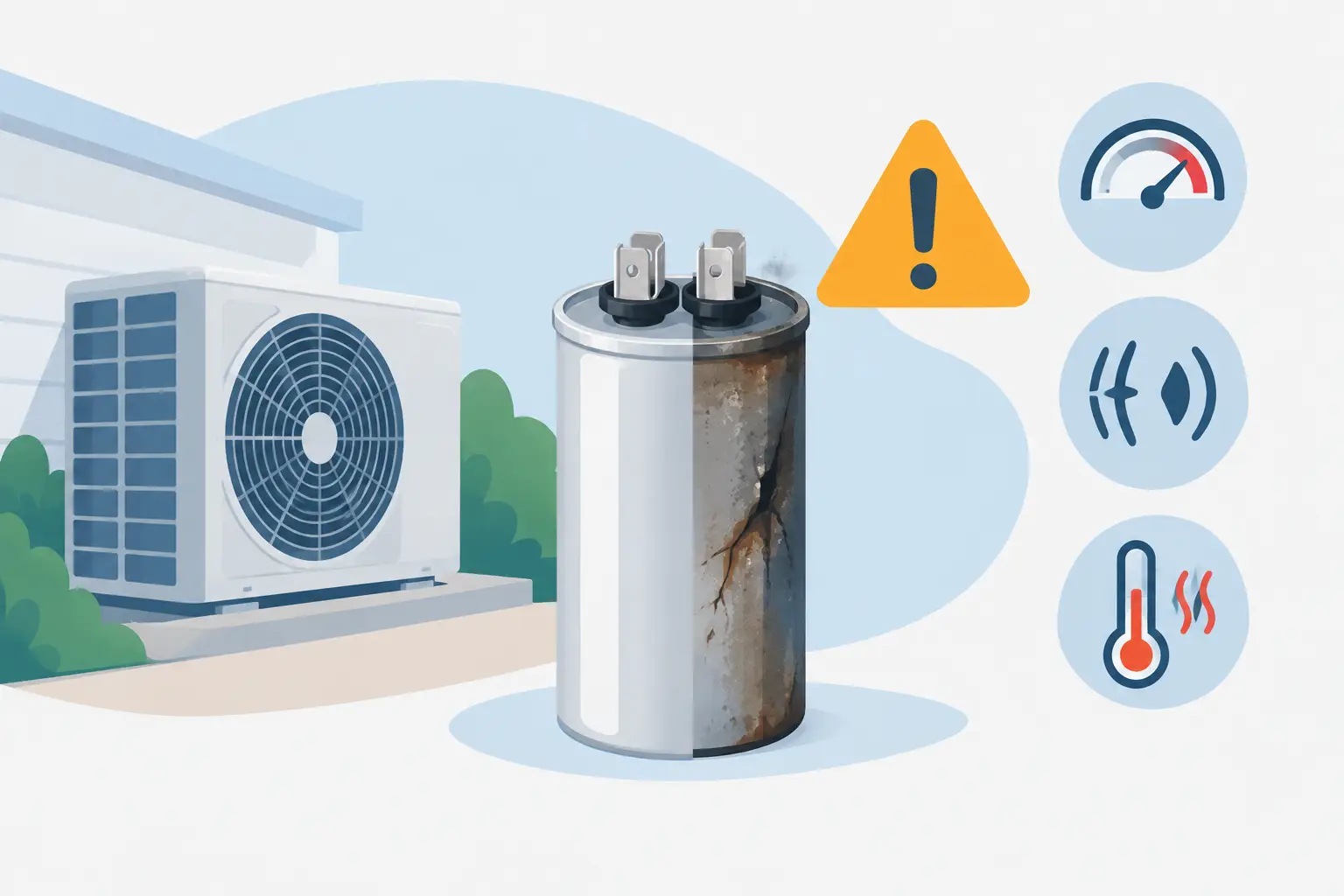
Physical condition matters as well. A capacitor may swell at the top, leak oily material, corrode, or show signs of overheating. However, not every failed capacitor looks damaged. Accurate testing requires proper HVAC electrical tools and an understanding of the equipment’s required microfarad rating, voltage rating, and wiring configuration.
What to Do When You Suspect a Failed Capacitor
Start with the thermostat. Confirm it is set to Cool and that the set temperature is below the current indoor temperature. Check whether the HVAC breaker has tripped. If it has, reset it once only if there are no signs of burning, damage, or unusual odor. If it trips again, leave it off.
Next, check the outdoor unit from a safe distance. Do not remove the access panel, touch wiring, or attempt to spin the fan with an object. Capacitors can retain a dangerous electrical charge even after power has been disconnected. Electrical shock and equipment damage are real risks.
Avoid the common advice to force-start a condenser fan with a stick or screwdriver. Even if the fan begins turning, the system may still be operating under damaging conditions. You could injure yourself, damage the fan blade, or cause a motor to fail completely.
A licensed HVAC technician can safely disconnect power, inspect the unit, test the capacitor, inspect wiring and contactors, and measure motor performance. This matters because the visible symptom may point to more than one possible issue. A failed contactor, damaged relay, compressor problem, loose connection, failing motor, or control issue can all create similar symptoms.
Why the Correct Capacitor Matters
Capacitors are not interchangeable just because they appear similar. Each replacement must match the system’s specifications. The microfarad rating must be correct, and the voltage rating must meet or exceed the original component’s requirement. The terminal configuration and physical fit also matter.
Installing the wrong part can lead to poor motor performance, repeated breakdowns, or premature equipment damage. A higher-voltage-rated capacitor may be acceptable when all other specifications match, but the microfarad rating should not be guessed. This is one reason professional replacement is usually the better value than a quick do-it-yourself fix.
For homeowners, a proper repair should include more than swapping a part. The technician should identify why the capacitor failed, confirm the fan and compressor are operating within acceptable ranges, and check that the system starts and cools correctly after the repair. For commercial property managers, this same approach helps reduce repeat service calls and protects tenant comfort, inventory, and operations.
Can You Prevent Capacitor Problems?
No maintenance plan can guarantee that an electrical component will never fail, but routine service can catch issues before they create a no-cooling emergency. During seasonal air conditioning maintenance, an HVAC technician can test capacitor readings, inspect electrical connections, clean the outdoor coil, verify refrigerant performance, and look for signs that motors are working harder than they should.
Keeping the outdoor unit clear also helps. Remove leaves, grass clippings, and debris from around the condenser, and maintain open space around the equipment for airflow. A clogged condenser coil can raise operating pressure and heat, adding stress to the entire system.
If your system is older and has had repeated capacitor, motor, or compressor issues, it may be time to discuss repair versus replacement. The right choice depends on the equipment’s age, condition, repair history, efficiency, and the cost of the repair. A straightforward assessment gives you the information needed to make a practical decision without surprises.
When to Call for AC Service
Call for professional service when your AC hums but will not start, blows warm air, trips a breaker, makes new electrical noises, or repeatedly shuts down. Waiting can turn a manageable capacitor replacement into a more significant motor or compressor repair.
Bethany Air provides dependable HVAC diagnostics and repair for homes and businesses throughout Edgewater, Annapolis, and surrounding Maryland communities. Experienced technicians can identify the actual source of the problem, explain the repair clearly, and help restore cooling with transparent, reliable service.
When the temperature climbs, a small electrical failure can quickly become a major comfort problem. Acting at the first warning sign gives your system its best chance of returning to service without unnecessary damage.
