

How to Choose the Best Commercial HVAC Maintenance Plans
A failed rooftop unit can disrupt far more than indoor comfort. It can close a dining room, make offices unproductive, put sensitive inventory at risk, or create a difficult situation for tenants and customers. The best commercial HVAC maintenance plans help facility managers and business owners prevent those urgent calls by finding small equipment issues before they become costly failures.
For commercial properties in Maryland, a maintenance agreement should do more than provide a couple of seasonal tune-ups. It should give you a clear service schedule, qualified technicians, useful documentation, and a dependable path to support when a system cannot wait. The right plan protects equipment performance while making HVAC budgeting and facility operations easier to manage.
What the Best Commercial HVAC Maintenance Plans Include
A quality commercial maintenance plan is built around the specific equipment and demands of your building. A small office with one split system requires a different approach than a retail center with multiple rooftop units, a restaurant with kitchen ventilation, or a multifamily property with common-area heating and cooling.
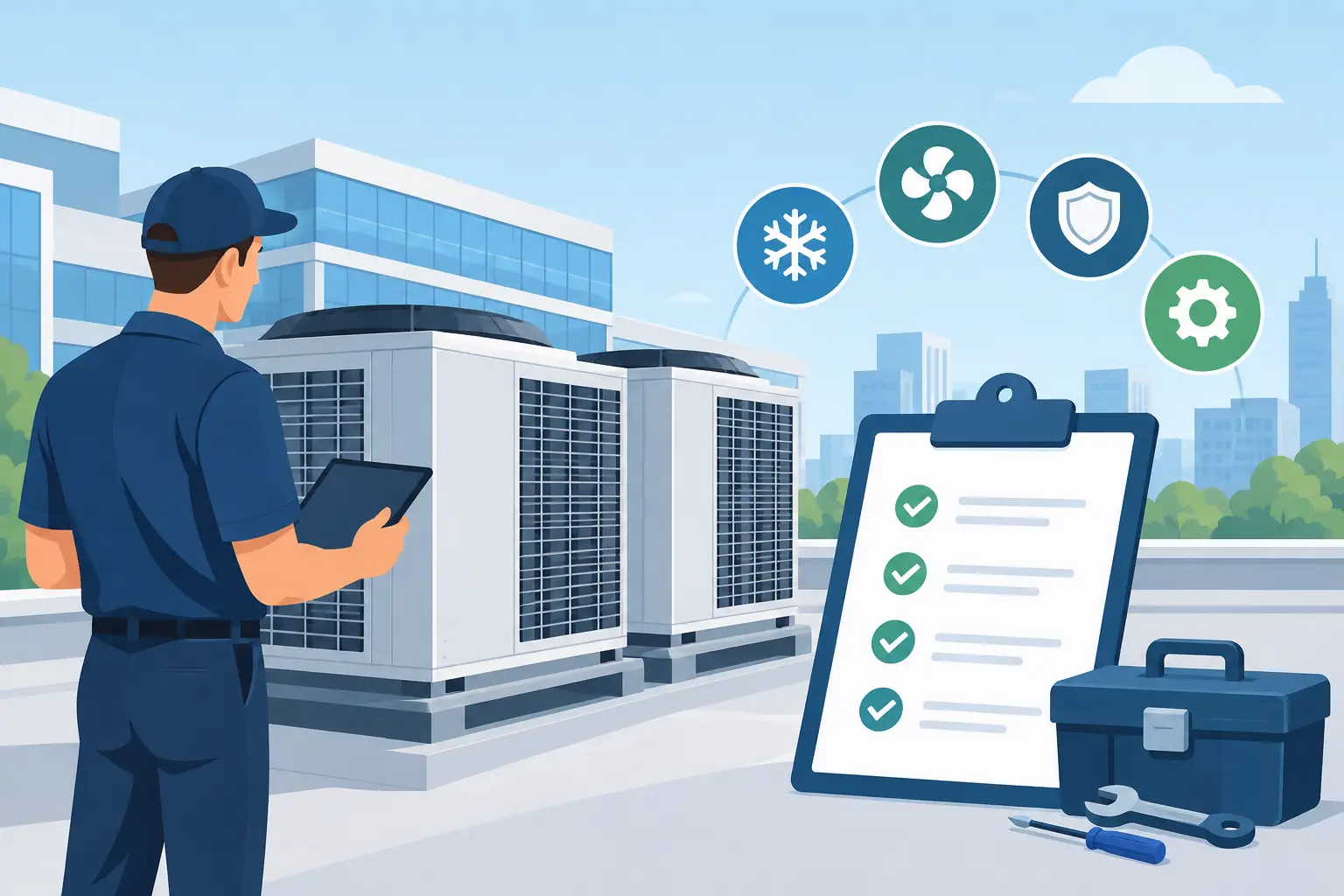
At a minimum, scheduled preventive visits should cover the mechanical, electrical, and airflow components that affect reliability and energy use. Technicians should inspect equipment condition, test operation, clean components where needed, identify worn parts, and document findings in terms a facility manager can act on.
A thorough commercial visit often includes checking refrigerant performance, electrical connections and controls, belts, bearings, blower assemblies, condensate drains, filters, coils, safeties, thermostats, and economizer functions where applicable. Heating equipment also needs its own attention, including combustion-related checks for gas-fired systems and inspection of boilers or furnaces based on the equipment in place.
The work should not be identical at every visit. Cooling maintenance is most valuable before heavy summer demand, while heating maintenance should prepare equipment for colder weather. Buildings with long operating hours, heavy occupancy, dust-producing operations, or critical temperature needs may need more frequent service than a standard twice-yearly plan.
Start With Your Building’s Actual Risk
The lowest-priced agreement is not always the least expensive choice. If it leaves out equipment that matters, provides only a quick visual inspection, or does not offer timely repair support, it may not reduce the risk your business is trying to manage.
Begin by taking inventory of your equipment. Include rooftop units, split systems, heat pumps, air handlers, boilers, furnaces, exhaust systems, make-up air units, ductless equipment, controls, and thermostats. Note each unit’s age, repair history, manufacturer, location, and role in the building.
Then consider what a failure would cost. A unit serving a conference room may be inconvenient. A unit serving a server room, medical office, assisted living area, restaurant dining space, or tenant-critical retail area can become an immediate operational problem. Critical equipment may justify more frequent inspections, priority repair response, and a closer review of replacement planning.
Age matters, but it is not the only factor. A newer system with a clogged drain, neglected filter changes, or poorly calibrated controls can still waste energy and fail early. Conversely, an older unit that receives regular professional care may remain dependable while you plan for replacement on your terms.
Look Beyond the Visit Count
Two maintenance plans can both promise spring and fall service, yet offer very different value. Ask what the technician will actually do, how long the visit is expected to take, and whether your full equipment list is included. A plan that sounds complete but excludes rooftop units, exhaust equipment, or controls can create gaps in your preventive care.
Also ask how findings are reported. Good documentation helps you make informed decisions. After each visit, you should receive a record of work performed, equipment condition, recommended repairs, and items to watch. For larger properties, this history can reveal repeat failures, declining performance, and units that are nearing the point where replacement makes better financial sense than continued repairs.
The agreement should clearly explain what is included and what costs extra. Preventive maintenance, repair labor, replacement parts, filters, refrigerant, after-hours calls, and diagnostic fees are not always handled the same way. Transparent pricing does not mean every repair is included at no cost. It means you know the terms before you need service.
Prioritize Response When Service Cannot Wait
Preventive maintenance reduces emergency calls, but it cannot eliminate every breakdown. Electrical failures, severe weather, component defects, and unexpected operating conditions can still take equipment offline. That is why response procedures belong in any commercial HVAC plan discussion.
Find out whether plan customers receive priority scheduling, what happens after normal business hours, and how emergency service is handled. A provider with 24-hour emergency support can be especially valuable for properties that operate nights and weekends or cannot safely wait until the next business day.
Response expectations should be realistic. A contractor cannot promise that every part will be available immediately, especially for older or specialized equipment. What a reliable service partner can provide is prompt communication, qualified diagnostics, practical repair options, and a clear explanation of the next step.
Choose Qualified, Commercial-Capable Technicians
Commercial HVAC equipment can be more complex than residential systems, and access can be more demanding. Technicians may need to work on rooftops, coordinate with property staff, follow site safety procedures, manage permits when required, and service a mix of equipment brands and system types.
Look for a licensed and insured contractor with proven commercial experience. Ask whether the company routinely services the types of systems in your building and whether it can handle repairs, replacements, ductwork, indoor air quality concerns, controls, and emergency calls. Using one capable provider for ongoing service can reduce handoffs and give the technician a better understanding of your equipment history.
For facilities across Edgewater, Annapolis, and surrounding Maryland communities, Bethany Air provides commercial maintenance and repair support backed by more than 20 years of HVAC experience. The goal is straightforward: keep equipment operating reliably, explain concerns clearly, and respond when an issue needs attention.
Know When More Frequent Maintenance Makes Sense
Twice-yearly maintenance works well for many commercial systems, but it is not a universal rule. Your property may benefit from quarterly visits, monthly filter service, or targeted inspections during high-use seasons.
More frequent maintenance is often worth considering for buildings with extended hours, high occupant density, kitchens, manufacturing activity, pet-related or dust-heavy environments, older equipment, or multiple tenant spaces. Facilities that depend on consistent temperature and humidity control should also consider a more detailed schedule.
Filters are a good example of why schedules must match the building. A filter changed only during seasonal maintenance may be acceptable in a lightly used office, but inadequate for a busy retail space or a building with high airflow demands. Dirty filters restrict airflow, strain equipment, reduce comfort, and can contribute to frozen coils or overheated components.
Use Maintenance Findings to Plan Capital Costs
A maintenance plan should not pressure you to replace equipment before it is necessary. It should help you recognize when repair costs, energy use, downtime risk, and remaining equipment life point toward replacement as the smarter decision.
Ask your HVAC provider to identify units that need monitoring and explain why. Useful recommendations include estimated repair priorities, likely upcoming component needs, efficiency concerns, and whether replacement can be planned during an off-season rather than after an emergency failure.
This is particularly useful for property managers managing several locations or systems. A documented equipment roadmap allows you to spread capital expenses over time, prepare for permitting requirements, and avoid making major decisions during the hottest or coldest day of the year.
Questions to Ask Before Signing a Service Agreement
Before choosing a plan, make sure the answers are specific to your building. Ask which equipment is covered, how many visits are included, what each visit includes, and how often filters will be checked or replaced. Confirm whether the plan includes written service reports and whether you receive priority scheduling for repairs.
You should also ask how emergency service is handled, whether repair labor or parts receive any plan-related pricing consideration, and who will be your point of contact. Finally, review the agreement term, renewal process, exclusions, and cancellation terms. A straightforward contract is easier to use when an urgent issue arises.
The best plan is not necessarily the one with the most features on paper. It is the one that fits your equipment, building use, operating hours, and tolerance for downtime. Choose a provider that can explain the work clearly, stand behind its service, and help you address problems before they disrupt your business.
